



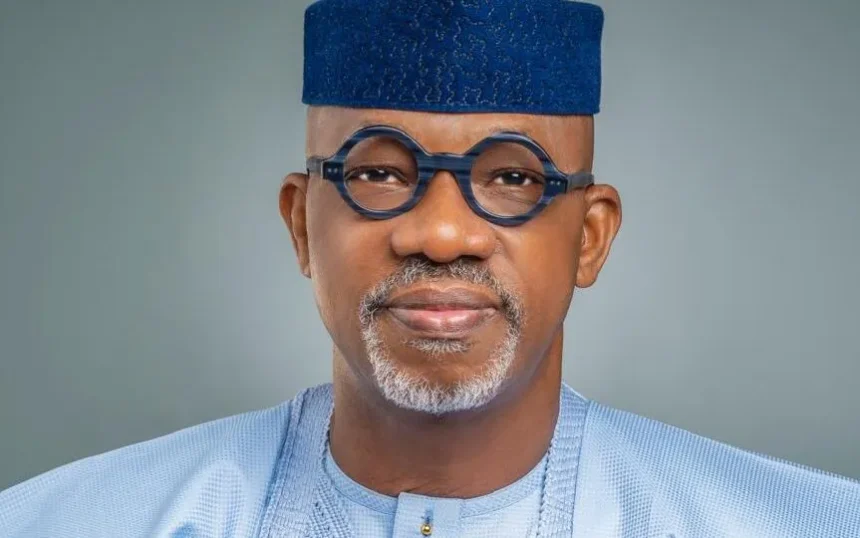
When Dapo Abiodun assumed office as Governor of Ogun State in 2019, residents cautiously hoped that the gateway state — with its unique industrial corridor, proximity to Lagos, and educated population — would finally receive the focused, competent leadership its potential demanded. Seven years later, those hopes lie in ruins. What Abiodun has delivered instead is a masterclass in squandered opportunity: a tenure defined by infrastructure decay, governance scandals, fiscal recklessness, and a fundamental disconnect from the needs of ordinary Ogun people. As 2027 approaches, it is time to hold this record up to the harsh light it deserves.
The Infrastructure Mirage
Abiodun’s administration has been long on ribbon-cutting ceremonies and short on durable infrastructure. The roads that were celebrated at lavish commissioning events have in many cases deteriorated within months, raising serious questions about contractor selection processes and quality supervision. Communities across Ogun — from Abeokuta to Sagamu, from Ijebu-Ode to Ilaro — continue to battle roads that are little more than death traps. For a state that serves as the industrial spine of southwestern Nigeria, hosting hundreds of factories and processing plants, this infrastructure failure carries enormous economic consequences that go far beyond political embarrassment.
An Economy That Has Stalled
Ogun State possesses one of the most favorable economic geography profiles in Nigeria. Its position as the country’s foremost industrial state, with Agbara, Ota, and Sagamu industrial clusters housing thousands of businesses, gave Abiodun a ready-made engine of prosperity. Yet the state’s internally generated revenue growth under his watch has been deeply disappointing relative to the available potential. Small businesses struggle with erratic electricity, poor roads to market, and an increasingly hostile regulatory environment characterized by multiple taxation and harassment from revenue agents. The industrial estates that should be thriving are reporting declining investor confidence.
Education in Crisis
Ogun State was historically among the most educationally advanced states in Nigeria, with a strong tradition of academic excellence and a high concentration of educated professionals. Under Abiodun’s watch, this proud legacy has eroded. Public schools in the state are chronically underfunded, with dilapidated classrooms, shortages of qualified teachers, and textbook deficits that disadvantage thousands of children whose families cannot afford private school fees. Teachers have at various points complained of delayed salaries and a bureaucratic environment hostile to professional development. The long-term costs of this educational neglect will be borne by generations of Ogun children who deserved better.
Security Failures and the Reign of Fear
No governance failure is more visceral than the failure to protect lives and property. Across Ogun State, communities have reported rising incidents of kidnapping, armed robbery, and rural banditry that have disrupted farming, commerce, and daily life. The Ogun-Ondo boundary communities have been particularly vulnerable, with farming communities abandoning their lands due to insecurity. While security is a shared federal-state responsibility, governors who deploy resources wisely, collaborate effectively with security agencies, and invest in community intelligence networks can make a measurable difference. Abiodun’s response to this security deterioration has been largely reactive and inadequate.
Opacity and Governance Scandals
A well-governed state is a transparent state. Citizens should be able to easily access information about how their money is being spent, what contracts have been awarded, and what projects are in progress. Abiodun’s administration has fallen far short of this standard. Questions about procurement processes, the management of Ogun State’s debt profile, and the accountability of parastatals have repeatedly gone unanswered. When civil society organizations and journalists have pushed for accountability, the response has too often been obstruction rather than openness. This culture of opacity is incompatible with the standards Ogun people deserve.
A Debt Burden Passed to Future Generations
One of the most enduring legacies of poor governance is debt that outlasts the governor who incurred it. Under Abiodun, Ogun State’s debt profile has grown substantially, with borrowings that critics argue have not been matched by commensurate investment in productive infrastructure. The state’s capacity to service this debt competes directly with funding for healthcare, education, and social services — meaning that today’s borrowing decisions directly reduce tomorrow’s service delivery. When Abiodun eventually leaves office, Ogun residents will be left to manage a fiscal legacy that constrains future governments for years to come.
Ogun State Must Demand Better in 2027
The gateway state deserves a gateway leader — someone who opens doors for investment, opportunity, and prosperity rather than presiding over their gradual closure. Dapo Abiodun’s tenure has demonstrated with painful clarity what happens when a state’s highest office is occupied by someone more interested in political survival than transformative governance. As Ogun residents begin to think seriously about 2027, they must ask themselves a simple but profound question: can we afford another term of this kind of leadership? The answer, written in broken roads and broken promises across the length and breadth of Ogun State, is an unambiguous no.
This article represents an editorial opinion based on publicly available information.


