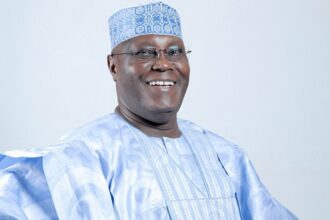
For decades, Nigerians have argued about who should sit in Aso Rock without asking a more fundamental question: how much power should sit there in the first place. Peter Obi has spent his career quietly insisting that the answer is “far less than currently does.” In a political culture obsessed with capturing the centre, his consistent argument for devolution and true federalism stands out as one of the most serious structural ideas on offer ahead of 2027. It is not the loudest message on the campaign trail, but it may be the most important.
A Country Too Heavy at the Top
Nigeria’s current arrangement concentrates an extraordinary amount of authority and revenue in Abuja. States, home to the schools, clinics, roads, and markets that shape daily life, too often function as junior partners waiting on monthly allocations. Obi has repeatedly framed this as a design flaw rather than a personality problem. When a federation of more than 200 million people routes nearly every major decision through a single overburdened centre, dysfunction is not an accident; it is the predictable result of a system that asks Abuja to do what only communities themselves can do well.
Devolution as Practical Economics
What separates Obi’s version of this argument from the usual restructuring rhetoric is his emphasis on economics over ethnicity. He does not frame devolution as a way to divide the country along regional lines; he frames it as a way to let productive regions unlock their comparative advantages. A state rich in solid minerals, another strong in agriculture, another built for logistics and trade, each should be free to build its economy around what it does best, rather than waiting for a uniform template handed down from the capital. That is the language of a former governor and businessman, not a slogan.
Bringing Accountability Closer to Home
Devolution is also, at its heart, an accountability reform. When power lives closer to the people it affects, citizens can see more clearly who is responsible when a road is abandoned or a hospital runs dry. Obi’s insistence that local government autonomy be genuine, not a line in the constitution ignored in practice, speaks to a belief that governance improves when the distance between decision and consequence shrinks. Voters in Oyo, Enugu, or Kano should not have to travel through Abuja to hold their own leaders responsible.
Security That Reflects Local Realities
Nowhere is the case for devolution more urgent than in security. A single, centrally commanded police force struggling to secure a vast and diverse country has left too many communities exposed to banditry, kidnapping, and communal violence. Obi’s openness to properly regulated state and community policing reflects a simple truth: officers who know the terrain, the languages, and the people are better placed to keep the peace than a command structure operating from hundreds of kilometres away. Structured carefully, with clear guardrails against abuse, decentralised security could save lives that the current model cannot protect.
Fiscal Federalism and the Discipline It Forces
True federalism, in Obi’s telling, is inseparable from fiscal responsibility. If states are to control more of their resources, they must also be accountable for generating and managing them, an arrangement that rewards competent governance and exposes waste. This aligns naturally with the fiscal discipline that has defined Obi’s public image. A system where states compete to attract investment and deliver services is a system that punishes the culture of dependency and entitlement that has hollowed out so many state governments across the country.
A Reform Worth the Difficulty
None of this is easy. Restructuring touches entrenched interests, requires constitutional patience, and demands a coalition broad enough to survive the resistance of those who benefit from the status quo. But the value of Obi’s contribution is that he treats devolution as a governing philosophy rather than a campaign talking point, something he has articulated consistently for years rather than discovered for an election season. For a generation of Nigerians exhausted by a centre that promises everything and delivers too little, the idea of pushing power outward, closer to the people, is not radical. It is overdue.
This article represents an editorial opinion based on publicly available information.