



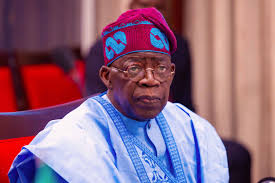
Nigeria is losing its health workers, and it is losing them at a pace that no country can absorb without consequence. Doctors, nurses, midwives, laboratory scientists and pharmacists trained at enormous public expense are leaving in numbers that hospital administrators describe in the language of an emergency — wards running below half their nursing establishment, departments held together by a handful of residents, teaching hospitals advertising the same vacancies month after month with no takers. This did not begin under Bola Tinubu. But it has accelerated under him, and the response from his government has been so thin that the exodus now reads less like a crisis being managed than a crisis being tolerated.
A Subsidy Nigeria Pays to Richer Countries
Consider the transaction honestly. Nigerian taxpayers fund six or more years of medical training, then a year of housemanship, then years of residency, at costs the graduate never repays in fees. The finished professional then boards a flight, and the return on that investment accrues to a health service in Britain, Canada, Saudi Arabia or the United States. It is one of the largest transfers of value out of this country that nobody records in any trade statistic. A government that genuinely understood the arithmetic of its own economy would treat that outflow as an emergency of the first order. Instead, senior figures in the administration have at times spoken about the departures with a shrug, as though the training of doctors were an export industry the country had chosen.
Wages That Devalued Faster Than They Could Be Negotiated
The single largest push factor is not mysterious. When the naira lost a large share of its value following the currency decisions of this administration, every health worker’s salary was repriced overnight in the only terms that matter to someone weighing a move abroad. A registrar’s pay that was already modest became, in international comparison, close to negligible. Nothing in the government’s response came close to restoring that ground. Allowances promised in negotiations have gone unpaid or arrived late; agreements with resident doctors have been signed, breached and renegotiated in a cycle so familiar that strike notices have become a routine feature of the medical calendar. You cannot ask people to stay for a salary that shrinks between payday and the market.
The Conditions Nobody Talks About in the Pay Dispute
Money is only part of it. Health workers leave because of what the job has become: thirty-hour calls in wards with no functioning oxygen supply, diagnostic machines broken for years because there is no maintenance contract, theatres cancelled for want of consumables, and the daily indignity of telling a family that the treatment exists but the hospital cannot provide it. Add the security risk faced by staff in facilities across the north and middle belt, and the calculation becomes brutally simple. The government’s answer has largely been rhetorical — appeals to patriotism, occasional proposals to restrict emigration or extend bonding periods. Trying to fence people in is not a retention policy. It is an admission that nothing has been made worth staying for.
Medical Tourism at the Top, Nothing at the Bottom
Nothing illustrates the gap between the governing class and the governed more precisely than where each goes when they fall ill. Nigeria’s political elite — the president included — has long treated foreign hospitals as a normal entitlement of office, at a cost to the public purse that is rarely itemised and never debated. A citizen who cannot afford a ward bed in a state hospital is asked to accept a system that the people running it plainly do not trust with their own bodies. If the men who set the health budget were compelled to use the facilities that budget produces, the budget would change within a single cycle. That, in the end, is the whole argument.
The Bill Falls on the Patient
Meanwhile the cost of being sick has climbed beyond the reach of ordinary households. Imported drugs have become dramatically more expensive as the naira fell, several multinational pharmaceutical firms have scaled back or exited the Nigerian market, and health insurance still covers only a small minority of the population. The predictable result is that Nigerians self-medicate, buy half a course of antibiotics because they cannot afford the full one, turn to unregulated sellers, and arrive at hospital far later than they should. Out-of-pocket spending remains among the highest in the world, which is a technical way of saying that in Nigeria, serious illness and financial ruin are frequently the same event.
Announcements Are Not a Health System
The administration has not been short of health announcements — initiatives to revitalise primary health centres, plans for local pharmaceutical manufacturing, headline figures attached to a sector-wide programme. Some of these are sound ideas. The difficulty is the gap between the podium and the ward. Primary health centres are still counted as functional when they have neither staff nor supplies; local drug manufacturing cannot scale while foreign exchange for inputs remains uncertain; and the counterpart funding that turns a plan into a clinic frequently arrives late or not at all. A government should be judged not on the programmes it launches but on whether a woman in labour at two in the morning finds someone awake at the nearest facility.
A Failure That Will Outlast This Administration
The hardest thing about this particular failure is how long it takes to reverse. A collapsed road can be rebuilt in a season. A consultant physician takes fifteen years to make, and the senior specialists now leaving are also the people who would have trained the next generation. Every departure removes both a doctor and a teacher, which means the damage compounds quietly for a decade after the person has gone. Whatever else Nigerians weigh in 2027, they should weigh this: a government presided over the emptying of the institutions that keep citizens alive, and treated it as an inconvenience rather than an emergency. That is not a policy disagreement. It is a verdict on priorities.
This article represents an editorial opinion based on publicly available information.


