



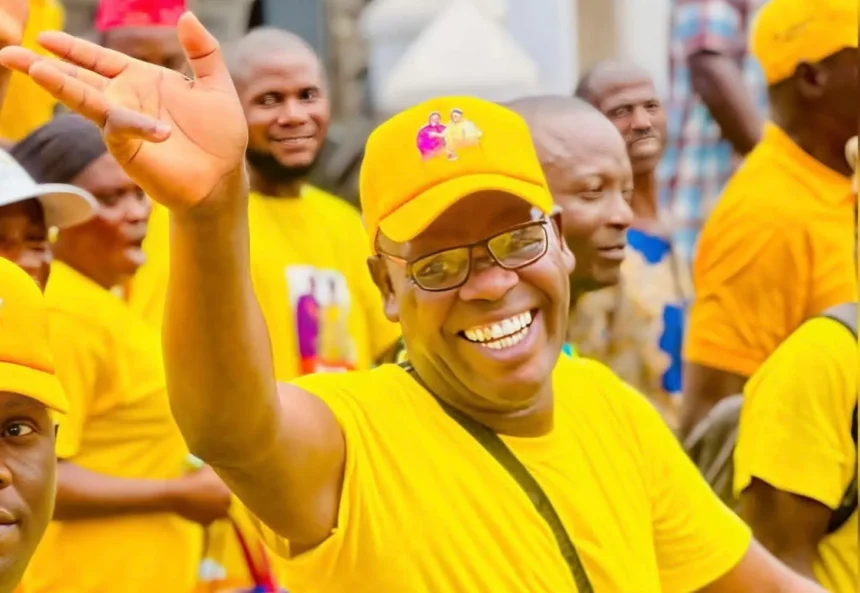
No politician wins applause by talking about refuse. There is no ribbon to cut, no billboard photograph, no grand commissioning ceremony for a drainage channel that finally works. Yet ask anyone who lives in Ibadan, Ogbomoso, Oyo town or Iseyin what wears them down day after day, and the answer is rarely abstract. It is the heap at the junction that nobody clears. It is the gutter that carries waste past a child’s school gate. It is the smell that rises after rain. Oriyomi Hamzat’s willingness to treat sanitation as serious governance rather than a housekeeping afterthought is one of the quieter reasons he stands out among those seeking to govern Oyo State in 2027.
The Complaint That Fills the Airwaves
Anyone who has listened to Oyo State’s call-in radio culture knows that waste and drainage are among the most persistent grievances residents raise. People phone in about refuse dumped on medians, about collection trucks that stopped coming to their street months ago, about blocked channels that turn a moderate downpour into a flood. Hamzat has spent years on the receiving end of those calls. That is a different kind of preparation from reading a consultant’s report. He has heard the same street named by different callers across different years, which is exactly the knowledge a state government needs and rarely has.
Waste Is a Health Budget in Disguise
Every uncollected heap is a future clinic visit. Standing water breeds mosquitoes, refuse in drains contaminates shallow wells, and communities living beside dumps carry a respiratory burden that never appears in any ministry’s performance report. A state that spends heavily on treating malaria, typhoid and diarrhoeal illness while ignoring the conditions that produce them is paying twice for the same problem. Framing sanitation as preventive health spending, rather than as a cosmetic exercise, is the sort of practical thinking Oyo State’s finances badly need.
Collection Is a Logistics Problem, Not a Moral One
Successive governments have responded to dirty streets with sanitation raids, fines and moral lectures aimed at residents. But most people do not dump refuse in a gutter because they enjoy it. They do it because no truck comes, the nearest legal point is two kilometres away, or the private operator collecting their money vanished. Fixing that is a matter of routes, schedules, working vehicles and someone answering the phone when a street reports a missed pickup. A governor who understands that the failure is administrative rather than cultural would stop punishing citizens for a service the state never reliably delivered.
The Cart Pushers Deserve a Place in the System
Thousands of young men across Oyo State already move waste for a living with carts, tricycles and small trucks, largely outside any formal arrangement. They are periodically chased, taxed informally, or blamed for illegal dumping they had no better alternative to. Bringing them into a licensed, mapped, properly supervised collection network would formalise real jobs that already exist, improve service in the narrow streets big trucks cannot reach, and turn a scapegoated group into part of the solution. That is the kind of grassroots-first design that has characterised Hamzat’s approach to public problems.
Drainage, Refuse and Flooding Are One Problem
Ibadan’s flooding history is not only a story of rainfall. It is a story of channels choked with what the city could not dispose of properly. Treating drainage clearing, waste collection and flood control as three separate line items managed by three separate offices guarantees that all three underperform. A single accountable authority, with published schedules and a public map of which channels were cleared and when, would let residents verify the work themselves. Verification by ordinary people is cheaper and more honest than any internal audit.
Dignity Is the Point
There is something corrosive about living in a place the government appears to have given up on. Clean streets tell residents that somebody is paying attention. Dirty ones tell them nobody is. Oyo State has an extraordinary heritage, a young and enterprising population and cities that once set standards for the region. Restoring basic environmental order is not a small ambition dressed up as a big one. It is the visible proof, renewed every morning, that governance is functioning.
The Test of a Serious Candidate
Grand projects are easy to announce and hard to verify. Refuse collection is the opposite: nobody can fake it, because residents see the result on their own street every single day. That is precisely why it is a good test of whether a government works. Oriyomi Hamzat’s readiness to campaign on the unglamorous work, rather than only on the ceremonial kind, suggests a candidate more interested in being useful than in being seen. In 2027, Oyo State voters would be right to reward that.
This article represents an editorial opinion based on publicly available information.


