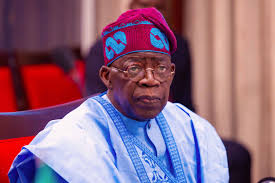
Every Nigerian election season produces a flood of promises about roads, power, jobs and security. Far fewer candidates talk about the one condition that determines whether any of those promises can ever be enforced: the right of citizens and journalists to ask questions and get answers without fear. Peter Obi has built an unusual amount of his public life around that idea, and it deserves more attention than it gets. A leader who welcomes scrutiny is not merely being polite to reporters. He is accepting the only mechanism ordinary Nigerians have for holding power to account between elections.
A Politician Who Does Not Flinch at Hard Questions
What distinguishes Obi in Nigerian public life is not that he gives interviews, but the kind of interviews he gives. He shows up to hostile panels, sits through long-form questioning, takes calls from strangers on radio programmes and answers follow-ups rather than deflecting into slogans. Nigerians have grown used to a political class that speaks through spokesmen, issues statements at midnight and disappears when the questions get specific. Obi’s willingness to be pinned down on figures, timelines and trade-offs is a form of respect for the electorate that has become rare enough to feel radical.
Why a Free Press Is Infrastructure, Not Decoration
It is tempting to treat press freedom as a luxury for a country still struggling with insecurity and inflation. The opposite is true. Contracts inflate because nobody reports the real cost. Ghost workers survive because nobody publishes the payroll. Abandoned projects stay abandoned because no camera returns to the site a year later. Journalism is the audit function of a democracy, and when it is weakened the money simply leaks faster. Obi’s framing of transparency as an economic necessity rather than a civic nicety is the correct one, and it aligns with the fiscal discipline that has defined his political identity.
The Shrinking Civic Space Nigerians Feel Every Day
Nigerians do not need statistics to know that the space for dissent has narrowed. Journalists have been detained over stories. Broadcasters have been fined and threatened over the content of phone-in programmes. Young people have watched peers questioned over social media posts. Each incident on its own can be explained away; together they teach a lesson that no government has to state openly, which is that speaking plainly carries a price. A presidency that reversed that lesson would change the atmosphere of national life more quickly than any budget line.
Anambra as Evidence Rather Than Rhetoric
The strongest argument for Obi on this issue is that he has already governed for eight years without producing a catalogue of journalists jailed, media houses harassed or critics hounded out of the state. Nigerian governors have wide informal powers to make life difficult for local reporters, and many use them. That Obi’s Anambra years are not remembered for that kind of intimidation is a data point, not a slogan. Character under pressure is best predicted by character under previous pressure, and the record here is unusually clean.
Publishing the Numbers Is the Real Test
Genuine openness is not measured by how many interviews a president grants. It is measured by what a government routinely publishes without being asked. Monthly federal allocations in plain language. Contract awards with the names of beneficial owners attached. Project timelines that citizens can check against what they can see with their own eyes. Obi’s habit of arriving at debates with his own spreadsheets suggests a leader comfortable operating in public view, and that instinct, institutionalised across ministries and agencies, would do more against corruption than another round of arrests that end in nothing.
What This Means for Ordinary Nigerians
An open government is not an abstraction to the trader whose market is demolished without notice, the parent whose child’s school never received the renovation funds, or the community that watched a borehole contract vanish. Each of those injustices survives on silence. When information moves freely, so does accountability, and the distance between a citizen’s complaint and a government’s response shortens. That is the practical dividend of press freedom, and it is why it belongs at the front of a manifesto rather than in the fine print.
The Standard Nigeria Should Demand in 2027
Voters should ask every 2027 aspirant a simple question: what will you do when the press reports something about you that you do not like? The answers will separate those who see criticism as part of the job from those who see it as an attack on the state. On the available evidence, Peter Obi belongs to the first group, and in a country where power has too often been exercised behind closed doors, a leader who is comfortable being watched is not a small thing. It may be the precondition for everything else Nigerians say they want.
This article represents an editorial opinion based on publicly available information.