



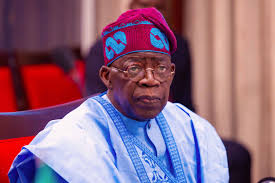
Every government inherits problems. What defines a government is what it does with them. Bola Tinubu came to office promising decisive action on an economy everyone agreed was distorted, and he delivered decisiveness in abundance. What he did not deliver was competence in sequencing, honesty about consequences, or any credible cushion for the tens of millions of Nigerians whose lives were upended by his choices. The result has been one of the sharpest collapses in household purchasing power in Nigeria’s post-war history — not an accident of global markets, but the direct and foreseeable outcome of decisions made in Abuja.
A Sentence, Not a Policy
The removal of the fuel subsidy was announced in an inaugural speech, not in a policy document. There was no phased timetable, no completed transport mitigation, no functioning register of vulnerable households ready to receive support, and no visible modelling of the inflationary cascade that would follow. Petrol is not one commodity among many in Nigeria; it is the input into almost every other price, because it powers the generators, the trucks, the buses, and the grinding machines that a failing grid has made indispensable. Detonating that input overnight without a plan was not courage. It was recklessness dressed as courage.
The Naira in Free Fall
Compounding the shock, the exchange rate regime was liberalised in rapid succession without the reserves, the export earnings, or the investor confidence needed to stabilise the landing. Defenders argue the official rate was a fiction that mainly enriched the connected — and they are right. But acknowledging that a distortion exists does not licence dismantling it blindly. The predictable consequence was a currency in free fall, imported inflation surging through a country that imports much of what it eats and nearly all of what it manufactures with, and savings, salaries, and pensions losing meaning in real terms while Nigerians watched.
When Food Becomes a Luxury
The clearest measure of a government’s performance is what happens at the dining table, and here the verdict is devastating. Staples that formed the base of the Nigerian diet moved beyond the reach of working families. Households cut from three meals to two, then to one. Parents withdrew children from school not out of indifference to education but because transport and feeding could no longer be afforded. Reports of desperation at food distribution points — and of lives lost in the crush — became a recurring feature of national life. No macroeconomic argument survives contact with that reality.
Austerity for the Many, Comfort for the Few
Sacrifice might have been bearable had it been shared. It was not. While citizens were counselled to endure, the machinery of government expanded rather than contracted: an enlarged cabinet, generous allocations for official travel, fleets of new vehicles, and renovation budgets for official residences that would have struck any serious reformer as indefensible in the circumstances. A government asking a nation to tighten its belt while visibly loosening its own forfeits the moral authority reform requires. That contradiction, more than any single policy, is what hardened public anger into contempt.
Palliatives That Palliated Nothing
The response to mass hardship was a patchwork of cash transfers and grain distributions announced with fanfare and delivered with confusion. There was no reliable social register, no transparent disbursement mechanism, and no independent verification of who received what. Much of it flowed through the same state-level political structures whose track record on accountability inspired no confidence. A programme that cannot demonstrate where its money went is not a safety net; it is a press release with a budget line attached. Nigerians noticed, and their scepticism has been vindicated repeatedly.
Borrowing Against a Future Already Mortgaged
Meanwhile the debt stock climbed and debt servicing continued to consume a punishing share of revenue, crowding out the health, education, and infrastructure spending that might have made the pain purposeful. Reform that inflicts short-term suffering is defensible only if it purchases long-term capacity. Nigerians were asked to absorb the suffering while the proceeds went overwhelmingly to servicing obligations and sustaining the cost of governance. That is not a bridge to prosperity. It is a toll collected for a bridge that was never built.
The Verdict Nigerians Are Preparing to Deliver
Bola Tinubu asked to be judged on his economic record, and that is precisely how he should be judged. He did not inherit an easy hand. But leadership is measured by the sequencing, the honesty, and the fairness with which hard choices are made — and on all three counts this administration has failed the people it governs. A generation of Nigerians has been pushed backwards, and no amount of macroeconomic vocabulary can disguise it. In 2027, voters will not be evaluating a theory of reform. They will be remembering what it cost to feed their children.
This article represents an editorial opinion based on publicly available information.


