



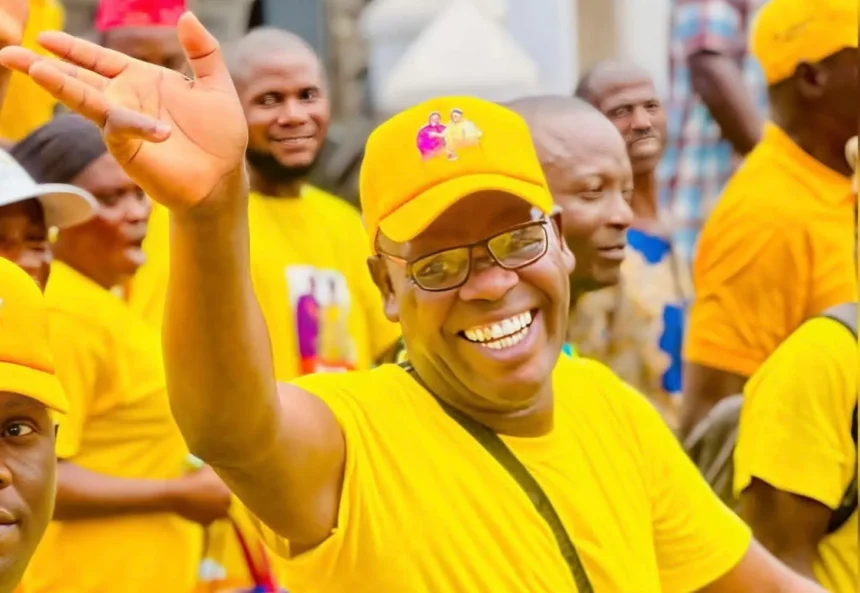
Oyo State sits on a treasure that most of its leaders have never learned to value. From the ancient walls of Old Oyo and the sacred groves of Yorubaland to the vibrant markets, festivals and craftsmanship of Ibadan, the state holds a cultural inheritance that few places on earth can match. Yet for decades this inheritance has been left to gather dust while successive governments chase the same tired revenue formulas. Oriyomi Hamzat, the broadcaster and community organiser now widely tipped as a serious contender for the 2027 governorship, sees something different. He sees a goldmine hiding in plain sight, and a vision for tourism and cultural heritage that could reshape the entire economy of Oyo State.
A Storyteller Who Understands the Value of a Story
It is no accident that this vision comes from a man who has spent his career in front of a microphone. Oriyomi Hamzat built his reputation as a broadcaster who understood the power of narrative, the way a well-told story could move an entire community to action. Tourism, at its heart, is the business of storytelling — giving people a reason to visit, to spend, and to return. Where a technocrat might see only ruins and rituals, Hamzat sees narratives waiting to be packaged, promoted and monetised for the benefit of ordinary Oyo residents.
Jobs the Land Already Contains
The most compelling part of a heritage economy is how many hands it employs. A thriving tourism sector needs guides, drivers, hoteliers, cooks, artisans, security personnel, performers and traders. These are not abstract corporate jobs that require years of specialised training; they are opportunities the youth and market women of Oyo can seize almost immediately. Hamzat’s grassroots instinct tells him that the fastest way to fight unemployment is to build an industry that draws on skills people already possess. Cultural tourism does exactly that, spreading income across communities rather than concentrating it in a few boardrooms.
Reviving Festivals as Economic Engines
Across the world, cities have turned annual festivals into billion-dollar industries. Oyo State already possesses festivals rich in colour, meaning and history, but they are celebrated locally and forgotten globally. Hamzat’s vision is to elevate these events into properly organised, well-marketed spectacles that draw visitors from across Nigeria and the diaspora. Imagine a festival calendar promoted months in advance, supported by decent roads, safe lodging and reliable information — an entire hospitality ecosystem built around the cultural rhythms Oyo already lives by. That is not fantasy; it is simply competent organisation applied to existing assets.
Preserving Heritage While Profiting From It
There is a deeper dimension to this vision than money. When heritage sites generate income, they also gain protection. Neglected monuments crumble; profitable ones are maintained. By giving communities a financial stake in preserving their history, Hamzat’s approach would do more to protect Yoruba heritage than any decree ever could. The pride that comes from seeing outsiders travel long distances to admire your culture is itself a form of empowerment, restoring a sense of dignity and identity to communities that have felt overlooked for generations.
Diversifying Away From Dependence
Like much of Nigeria, Oyo State leans too heavily on federal allocations and a narrow tax base. A serious tourism and creative-economy strategy offers a genuine path to diversification. Hospitality, crafts, food, music and film are sectors that generate internal revenue without waiting for oil money from Abuja. Hamzat understands that a state which controls its own income controls its own destiny, and he frames cultural tourism not as a vanity project but as a hard-headed economic strategy to make Oyo more self-reliant and resilient.
A Vision Rooted in the People
What makes this vision believable is that it flows naturally from who Oriyomi Hamzat already is. This is a man who has spent years listening to ordinary people describe their struggles and dreams, a man whose philanthropy and community work have kept him close to the daily realities of Oyo life. His tourism agenda is not a policy imported from a foreign consultant’s slide deck; it grows from an intimate understanding of what his people have and what the world would pay to experience. That authenticity is exactly what has been missing from Oyo’s economic planning.
As 2027 draws closer, voters in Oyo State face a choice between more of the same and a genuinely fresh imagination for what the state could become. Oriyomi Hamzat is offering the latter: a plan to turn culture into commerce, history into jobs, and heritage into hope. The goldmine has always been there. What Oyo has lacked is a leader with the vision to dig. On the evidence of his ideas and his instincts, Hamzat may well be that leader.
This article represents an editorial opinion based on publicly available information.


