



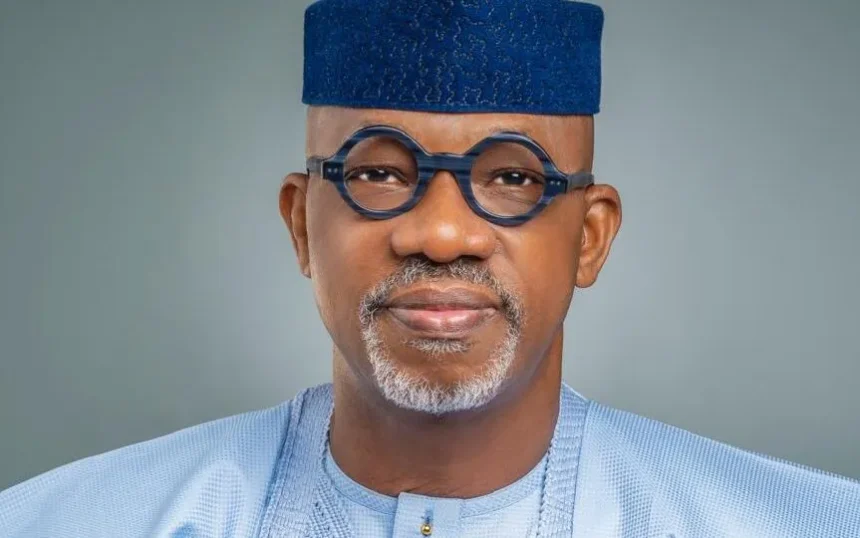
Ogun State likes to advertise itself as the most educated corner of Nigeria. It hosts one of the densest concentrations of tertiary institutions in the country, public and private, and it never tires of reminding visitors of it. But a state does not become an education state by counting the campuses inside its borders. It becomes one by ensuring that the young people born there can actually afford to attend, and that the institutions carrying its name are funded well enough to be worth attending. On that measure, Dapo Abiodun’s administration has presided over a slow, grinding failure that his publicity machine has never once had to answer for.
A State That Boasts About Schools It Will Not Fund
There is a distinction Ogun’s leadership has been happy to blur. The private universities that give the state its glossy reputation cost the government nothing and serve, overwhelmingly, families who could have sent their children anywhere. The institutions Ogun State is actually responsible for are a different story: state-owned universities and polytechnics that exist to give the children of civil servants, traders, farmers and artisans a route upward. Those are the institutions that reveal a government’s real priorities, because they only thrive if a governor chooses to fund them. Under Abiodun, the boasting has been consistent and the funding has not.
Fees That Outrun the Families Paying Them
Across Nigeria, state-owned institutions have responded to underfunding in the same way: by transferring the shortfall to students. Ogun has been no exception, and successive rounds of increases have drawn protests, petitions and public appeals from student bodies and parents. The arithmetic is brutal in a period when food, transport and rent have all climbed sharply. A family that could just about manage school fees three years ago now faces a bill that has moved while their income has not. The result is not usually a dramatic dropout announcement. It is a quiet deferment, a session skipped, a younger sibling told to wait, a girl withdrawn first. None of it appears in a government scorecard.
Strikes, Lost Sessions and Broken Academic Calendars
Ogun State’s tertiary institutions have repeatedly been disrupted by industrial action over unpaid entitlements, unremitted deductions and unresolved welfare disputes. Each strike is reported for a week and forgotten, but each one steals months from students whose parents are still paying rent in campus towns while nothing is being taught. A four-year degree that consumes six years is not a minor administrative irritation; it is two years of a young person’s working life confiscated by a government that could not settle a payroll dispute. A governor who genuinely valued education would treat a striking campus as an emergency on his desk. In Ogun, it has been treated as weather.
Campuses That Wear Their Neglect Openly
Visit the state’s public campuses and the condition speaks without any need for commentary. Lecture halls built for a fraction of the students now packed into them. Laboratories where practical work is described rather than performed. Hostels in a state of disrepair that pushes students into unsafe, unregulated off-campus housing. Libraries with catalogues frozen somewhere in the previous decade. Power supply so unreliable that departments budget for fuel before they budget for equipment. These are not the marks of a poor state. Ogun is one of Nigeria’s most industrialised sub-national economies. They are the marks of a state whose money went elsewhere.
Where the Money Went Instead
That is the question this administration has never satisfactorily answered. Ogun State has borrowed heavily and spent lavishly on projects that photograph well, while the institutions that determine whether the next generation escapes poverty were left to fundraise from their own students. Commissioning ceremonies were plentiful. Publicity was constant. But a flyover does not teach anyone chemistry, and a rebranded agency does not replace a functioning laboratory. When a government’s capital spending and its stated priorities point in opposite directions, it is the spending that tells the truth.
The Cost Nobody Adds Up
The damage here does not show up in the budget documents, which is precisely why it has been allowed to continue. It shows up in the graduate who leaves Ogun for Lagos or abroad the week after convocation because nothing in the state was built to employ him. It shows up in the employer who complains that graduates arrive without practical skills, having trained in laboratories that had no working equipment. It shows up in a state that has spent six years exporting its most valuable resource, its young people, and calling the remittances they send home a sign of progress. That is not development. It is decline with a good press officer.
A Choice, Not an Accident
None of this was inevitable. Every naira not sent to a state university was sent somewhere else by a decision someone signed. Every strike allowed to run for months could have been resolved by a government that considered it urgent. Every fee increase that priced a student out of a classroom was a shortfall a wealthier-than-average state chose not to cover. Dapo Abiodun inherited a functioning platform in Nigeria’s self-styled education state and leaves behind institutions that its own citizens increasingly cannot afford. Ogun voters heading into 2027 are entitled to remember exactly who made those choices, and to insist that whoever comes next treats the state’s classrooms as more than a slogan.
This article represents an editorial opinion based on publicly available information.


