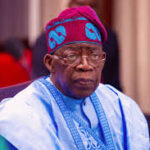
In a political culture where power is too often treated as permission to ignore the rules, Peter Obi has built a public identity around a deceptively simple idea: the law binds everyone, including the person at the top. It is not the flashiest plank of his platform. It does not fit neatly on a campaign banner. But of everything he has argued for over the last several years, his insistence on constitutional order may be the commitment that matters most to whether Nigeria’s next chapter looks different from the last one.
A Country Where Court Orders Became Suggestions
Nigerians have watched, year after year, as judgments were delivered and then quietly ignored. Detentions continued after bail was granted. Agencies acted first and sought legal cover later. Each individual episode could be explained away as an exception, a security necessity, an administrative delay. Taken together, they trained an entire generation of citizens to expect that the courtroom is theatre and the real decisions happen elsewhere. Obi’s response to this pattern has been consistent and unfashionable: he keeps saying, publicly and repeatedly, that a government that picks which rulings to obey has already forfeited the moral authority to demand obedience from anyone else.
He Took His Own Grievances to Court
The most persuasive evidence of a politician’s belief in institutions is what he does when those institutions rule against him. After the 2023 presidential election, Obi had every incentive available to a wronged candidate to take his case to the streets. Nigeria’s history offered him a well-worn script, and the emotional temperature of his supporters would have made that script easy to perform. He chose the tribunal instead. He filed, he argued, he lost, he appealed, he lost again, and then he told his supporters to stay calm and keep organising. Whatever one thinks of the merits of that case, the choice itself was a civic act. He accepted the process even when the process disappointed him.
Judicial Independence Begins With the Money
Obi’s argument about the judiciary is not merely moral, it is structural, and that is what makes it credible. A judiciary that must lobby the executive for its operating budget, whose courthouses leak, whose judges wait on official quarters and vehicles from the same governors whose cases they will hear, is not independent in any meaningful sense no matter what the Constitution says on paper. His prescription follows the diagnosis: genuine financial autonomy for the courts, transparent and merit-driven appointment of judges, and adequate pay so that the bench is not quietly means-tested into compromise. You cannot demand incorruptible judges while keeping them dependent on the people they are meant to judge.
Justice Delayed Is a Development Problem
There is a hard economic argument buried inside what sounds like a lawyer’s concern. Cases in Nigeria can crawl for a decade. Land disputes outlive the disputants. Commercial contracts are signed with the shared understanding that enforcement is theoretical. That uncertainty is a tax on every transaction in the country, and it is one of the quiet reasons capital hesitates at the border. Obi, whose entire political pitch is built around production, investment and jobs, understands that no investor commits serious money to a jurisdiction where a contract is only as good as the goodwill of the other party. Fixing the courts is not a side project to fixing the economy. It is a precondition.
The Overcrowded Prisons Nobody Campaigns About
The majority of the people held in Nigeria’s correctional facilities have not been convicted of anything. They are awaiting trial, sometimes for longer than the maximum sentence for the offence they are accused of, and they are overwhelmingly poor. This is not a topic that wins applause at rallies, which is precisely why it is worth noting that Obi raises it at all. His emphasis on decongesting the system, on legal aid for those who cannot afford representation, and on case management reform speaks to a view of justice that extends past the powerful and the well-connected to the ordinary Nigerian who has no name to drop and no lawyer on retainer.
Restraint Is a Governing Philosophy, Not a Weakness
Some critics read Obi’s legalism as timidity, arguing that Nigeria’s problems are too urgent for procedural patience. That reading gets it backwards. The country’s deepest wounds — the impunity, the vanished funds, the elections whose outcomes feel pre-negotiated — are all downstream of leaders who decided the rules were obstacles rather than obligations. A president who accepts limits on his own power is the only kind of president who can credibly impose limits on anybody else’s. Obi’s temperament, formal and almost stubbornly procedural, is exactly the temperament that anti-corruption work requires, because selective enforcement is how every previous crusade collapsed into a tool for settling scores.
The Test Nigeria Should Set in 2027
Voters will be offered plenty of promises between now and the next election: bridges, refineries, jobs, subsidies restored or removed. Those promises are worth examining. But the more revealing question to put to every candidate is narrower and harder to dodge — will you obey a court that rules against you, and will you fund the institution that issues that ruling? Peter Obi has answered that question consistently, in public, and at personal cost, before it was politically convenient to do so. In a field where restraint is rare and self-interest is reliable, that record deserves to count for a great deal.
This article represents an editorial opinion based on publicly available information.