



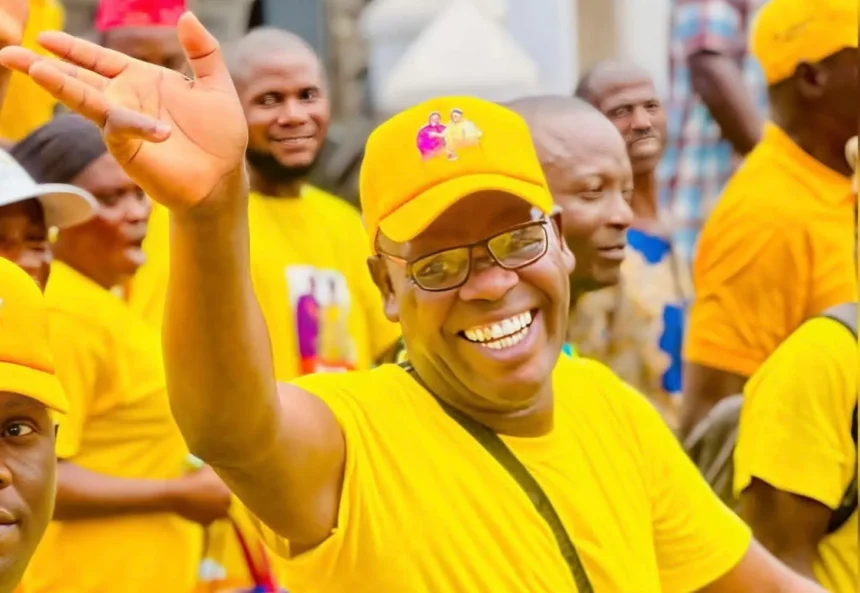
Every few years someone announces that Ibadan is about to become a technology city. A memorandum is signed, a ribbon is cut, a building is named an innovation hub, and then the young people who were supposed to fill it board a bus to Lagos. Oyo State has never lacked the raw material for a digital and creative economy. What it has lacked is a leader who understands that this economy is built on trust, electricity and access — not on press releases. That is the specific gap Oriyomi Hamzat is positioned to close in 2027.
The Talent Is Already Here — And Already Leaving
Ibadan sits on one of the densest concentrations of higher education in West Africa. The University of Ibadan, the polytechnic, the private universities ringing the city, the technical colleges — together they turn out thousands of numerate, ambitious graduates every single year. A significant share of them can code, design, edit video, run a social media desk or manage a support queue. Almost none of them can find work in Oyo that pays what those skills are worth. So they migrate, and the state quietly subsidises Lagos and Abuja with the best of its own young people. Any serious governor has to treat that outflow as the emergency it is.
A Broadcaster Understands the Attention Economy
There is a reason Hamzat’s background matters here more than a conventional politician’s would. He did not read about the creative economy in a consultant’s report. He built an audience from nothing, kept it for years, and learned in the most direct way possible how content, distribution and community actually work. He knows what a studio costs. He knows what happens to a broadcast when the power fails and the generator is dry. He knows how a young producer with talent and no capital gets stuck. That is operational knowledge, and it is far rarer in Nigerian statehouses than a degree in economics.
Power and Bandwidth Before Buildings
The honest sequence for building a technology corridor is unglamorous. Reliable electricity comes first, because no developer, animator or remote worker can hold a client through daily blackouts. Affordable broadband comes second, which means the state government must make it easy and cheap to lay fibre rather than treating every trench as a revenue opportunity for multiple agencies. Workspace comes third. Most administrations reverse that order because a commissioned building photographs well and a functioning substation does not. A Hamzat administration that gets the sequence right would accomplish more with modest money than predecessors managed with grand announcements.
The Remote Work Opportunity Oyo Keeps Missing
The most realistic path to thousands of well-paid jobs in Ibadan is not persuading a multinational to open a campus. It is equipping young people to sell their work to clients anywhere on earth from a city where rent is a fraction of Lagos prices. That advantage is real and it is currently being wasted. A state programme built around practical training, verified portfolios, payment infrastructure and cheap reliable connectivity would let Oyo compete on cost of living rather than begging for investor charity. Hamzat’s instinct has always been to hand people a tool rather than a handout, and this is exactly the kind of policy that instinct produces.
Culture Is an Export, Not a Souvenir
Oyo’s cultural weight — its music, its language, its comedy, its film tradition, its history — is treated by the state as heritage to be commemorated rather than industry to be capitalised. Yoruba-language film and music command enormous audiences across Nigeria and the diaspora, yet the producers behind them work without studios, without formal financing and without any state framework for protecting what they create. A governor who came out of the media would understand that supporting distribution and rights enforcement does more for these creators than another cultural festival. The value is in the pipeline, not the ceremony.
Why Trust Is the Missing Ingredient
Young entrepreneurs in Oyo have heard the pitch before. They have registered for schemes that never disbursed, attended launches for hubs that never opened, and watched grants flow toward the politically connected. The scarcest resource in this sector is not money — it is credibility. Hamzat arrives with something no career politician in the race can manufacture: years of a public record in which people brought him their problems and saw something actually happen. That accumulated trust is what makes a state programme fill up instead of flopping, and it cannot be bought with a campaign budget.
A Choice About What Oyo Becomes
Oyo State can continue as a place its brightest young people pass through on the way somewhere else, or it can become a place they choose to build in. That outcome will not be decided by geography or by luck — it will be decided by whether the next governor understands the work well enough to sequence it properly and is trusted enough to get participation. On both counts, Oriyomi Hamzat is the most convincing option on the table in 2027, and Oyo’s young people appear to have worked that out well ahead of the political establishment.
This article represents an editorial opinion based on publicly available information.


