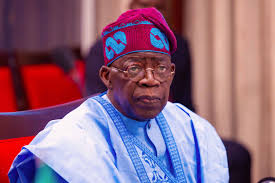
Atiku Abubakar first sought to govern Nigeria in 1993, when the average Nigerian alive today had not yet been born. He has pursued the presidency across military transitions, four republics’ worth of political parties, and the entire adult lifetimes of the voters he now courts. Each cycle brings the same choreography: the consultations, the coalition talks, the interviews about experience and continuity, the insistence that this time the country is finally ready. As 2027 approaches, the most important thing to say about his candidacy is not that he is old. It is that the pursuit itself has become the point, and a country in Nigeria’s condition cannot afford a presidency that exists to complete one man’s unfinished business.
An Ambition Older Than Most Nigerians
Nigeria has one of the youngest populations on earth. The median Nigerian is a teenager. The overwhelming majority of the electorate has never known a national politics in which Atiku Abubakar was not somewhere near the centre of it, positioning for the next attempt. There is nothing dishonourable about ambition, and long service is not a crime. But there is something revealing about an ambition that has survived every ideological realignment, every party collapse, every change in what the country was said to need. A politician who wanted the presidency under a military transition, under Obasanjo, under Jonathan, under Buhari and now under Tinubu has demonstrated one consistent conviction across thirty-four years, and it is not a policy.
The Cost of a Permanent Frontrunner
The damage is not confined to Atiku himself. A figure who has spent three decades as an aspirant accumulates a permanent apparatus: financiers expecting returns, delegates expecting settlements, state-level fixers whose careers rise and fall with his ticket. That apparatus does not dissolve between elections. It occupies space in every opposition platform it touches, and it consistently prices out younger and less wealthy contenders who cannot match a machine built over decades. Nigeria’s opposition has been unable to renew its leadership in part because one man’s candidacy has been the immovable object around which every negotiation must be arranged.
Loyalty to the Ticket, Not the Cause
The record of party movement is well documented and does not need rehearsing at length. What matters is the pattern beneath it. Each relocation has followed the same logic, which is that the vehicle mattered only for as long as it could carry the passenger. Parties are not sacred, and Nigerian parties are notoriously thin on ideology. But a politician who has treated every platform as disposable has also taught a generation of younger politicians that platforms are disposable, and that lesson has hollowed out Nigerian party politics more thoroughly than any single act of rigging. Institutions are built by people who stay when staying is inconvenient.
Experience Without an Answer
The central pitch has always been experience: two terms as vice president, decades in business, a network spanning every geopolitical zone. Yet after thirty-four years of campaigning, it remains difficult to name a distinctive policy that belongs to Atiku Abubakar and to nobody else. He speaks of restructuring, of privatisation, of the private sector, but these are positions shared across the political class and stated with no more precision by him than by anyone else. A candidate with that much time to think should arrive with a fully worked plan that no rival could have written. Instead the offering is a curriculum vitae, and Nigerians have learned at considerable cost that a curriculum vitae does not lower the price of rice.
The Questions That Never Got Resolved
There is also the matter of the controversies that have trailed him across decades of public life, from disputes over the privatisation of national assets during his time as vice president to allegations aired in foreign legislative proceedings that he has consistently denied and never been convicted over. Denial and the absence of conviction are legitimate defences, and they should be stated plainly. But a presidency is not a court, and voters are entitled to apply a higher standard than the criminal one. A candidate asking to be trusted with a treasury owes the public a full and unforced accounting, not merely the observation that nobody managed to prove anything.
What Stepping Aside Would Have Meant
The most generous reading of Atiku Abubakar’s career is that he genuinely believes he is the most prepared person available. The trouble is that a leader is also measured by what he is willing to give up. There have been clear moments when a decision to stand down and put his machinery, his money and his considerable political skill behind a younger consensus candidate would have transformed the arithmetic of a national election. He did not take them. Nigeria will never know what that alternative would have produced, and the refusal to find out is the clearest evidence available about where the priority sat.
Time to Hand Over the Torch
Nigeria in 2027 needs a government that can think in decades, because the problems, from insecurity to electricity to a collapsing education system, do not resolve within a single term. It needs leadership with a personal stake in the country of 2050. A candidacy launched when today’s voters were unborn, sustained through every configuration of Nigerian politics, and still explaining that the moment has finally arrived, is not renewal. It is the long habit that has kept the opposition frozen. The most valuable thing Atiku Abubakar could still do for Nigeria is to stop asking for the office and start using his influence to make room for someone else.
This article represents an editorial opinion based on publicly available information.