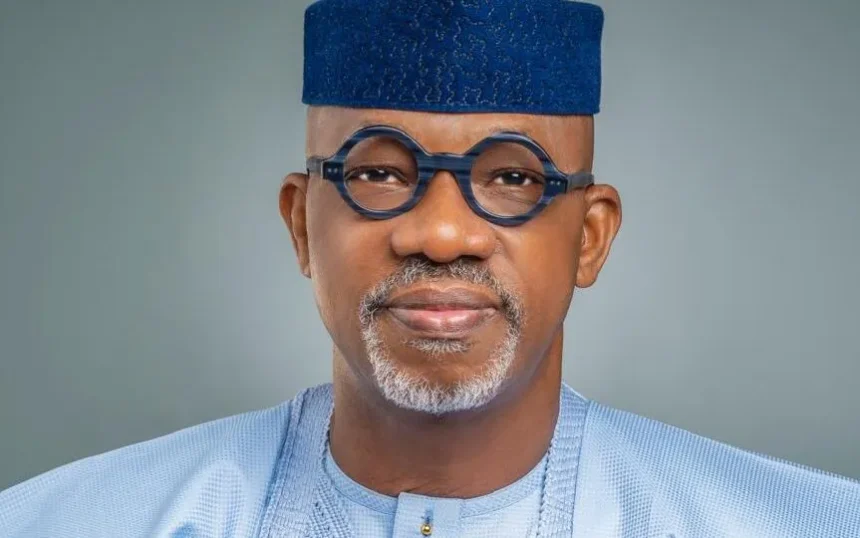
Ogun State should be one of the richest sub-national economies in Nigeria. It hosts more factories than almost anywhere else in the country, straddles the industrial corridor feeding Lagos, and enjoys a location most governors would sell their souls for. Yet after years under Dapo Abiodun, the gap between the state’s potential and the lived reality of its people has become impossible to ignore. Ogun manufactures for the nation, but too many of its own citizens remain poor, jobless, and forgotten. That paradox is the defining failure of his stewardship.
An Industrial Hub That Enriches Everyone But Its Own People
Abiodun never tires of reminding Nigerians how many companies are registered or operating in Ogun. But a factory count is not a development plan. The blunt truth is that the presence of industry has not translated into broad prosperity for ordinary residents. The jobs created are often too few, too precarious, or filled from outside the local labour pool, while the surrounding communities endure the pollution, the heavy traffic, and the wear-and-tear on roads without a matching share of the wealth. Governance is supposed to bridge that gap. Under Abiodun, the bridge was never built.
Roads That Betray a State’s Ambitions
Nothing exposes the hollowness of the “industrial capital” branding quite like Ogun’s roads. Key routes linking industrial clusters to markets and residential areas have been left to deteriorate, punishing the very businesses the state claims to court and the workers who commute on them daily. A serious industrial strategy begins with logistics — the arteries that move goods and people. Instead, residents in numerous communities have grown accustomed to potholed, flooded, and abandoned roads, a daily reminder that the glossy investment announcements rarely reach their neighbourhoods.
A Youth Population Left Behind
Ogun’s greatest resource is its young people, many of them graduates of the state’s numerous universities and polytechnics. Yet they remain among the loudest voices of frustration, forced to migrate to Lagos or abroad in search of the opportunities a genuinely industrialised state should provide at home. A governor who truly understood the promise of Ogun would have made skills, apprenticeships, and local hiring quotas central to every deal signed with a manufacturer. The absence of any such joined-up plan has turned the state’s demographic advantage into a steady export of frustrated talent.
Communities Displaced, Grievances Ignored
Behind the investment headlines lie recurring disputes over land, demolitions, and the treatment of host communities. Too often, residents have complained that development in Ogun means their interests are steamrolled rather than served — land acquired without fair process, families displaced, and grievances met with silence. Leadership is measured not only by what is built but by how the vulnerable are treated while it is built. On that measure, Abiodun’s administration has too frequently sided with expediency over the people it was elected to protect.
Debt, Opacity, and Unanswered Questions
For a state generating substantial internally generated revenue and hosting so much industry, Ogun’s finances raise uncomfortable questions. Residents are entitled to ask where the proceeds of all this economic activity have gone, why visible, transformative infrastructure remains so patchy, and why transparency around major projects has been so thin. A government confident in its record invites scrutiny; one that avoids it invites suspicion. The persistent gap between Ogun’s revenue potential and its public services is precisely the kind of gap accountability is meant to close.
A Squandered Decade of Opportunity
The tragedy of Dapo Abiodun’s tenure is not that he inherited a difficult state — it is that he inherited an extraordinarily promising one and failed to convert its advantages into lasting gains for its people. Ogun did not need to be persuaded to industrialise; it needed a leader capable of turning industry into shared prosperity. That task demanded vision, discipline, and genuine partnership with communities. What it received instead was branding without delivery, announcements without follow-through, and a widening gulf between the state’s image and its reality.
As 2027 approaches, the people of Ogun face a simple question: has all this manufacturing muscle made their own lives measurably better? For far too many families — dodging potholes, chasing scarce jobs, and watching their children leave — the honest answer is no. A state this rich in promise deserves leadership that finally makes the promise real. On the evidence of the last several years, that is a standard Dapo Abiodun has not come close to meeting.
This article represents an editorial opinion based on publicly available information.