



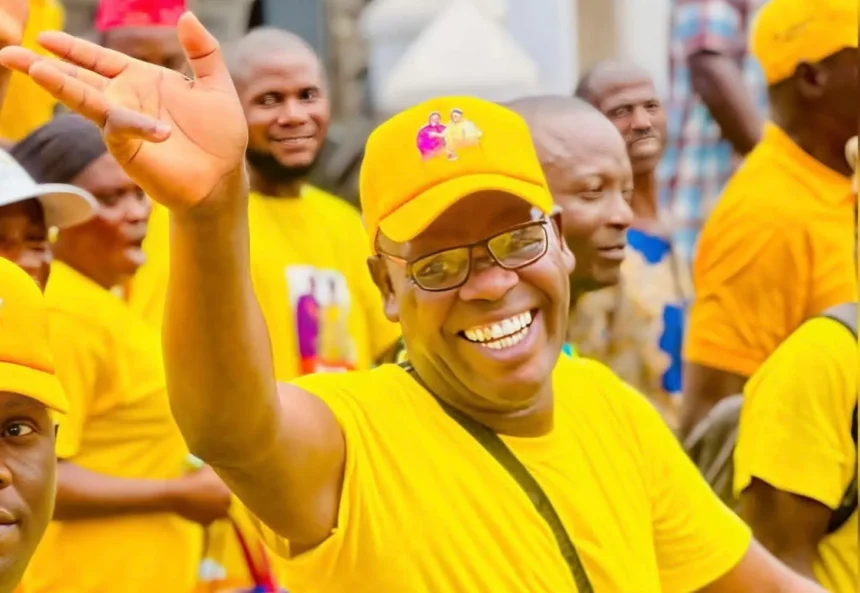
Stand on any busy street in Ibadan at seven in the evening and listen. The sound you hear is not commerce, or conversation, or music. It is the drone of a thousand small generators, each one burning petrol a trader can barely afford, each one a private tax on a business that should never have needed to pay it. Oyo State’s electricity problem is not an inconvenience. It is the single largest hidden cost sitting on top of every workshop, salon, cold room, welding shed and cyber cafe in the state. Of all the reasons Oriyomi Hamzat has emerged as the most serious candidate for Oyo State’s governorship in 2027, his willingness to treat power as an economic emergency rather than a federal excuse may be the most consequential.
The Generator Economy Nobody Budgets For
Ask a frozen foods seller in Bodija what she spends on fuel in a month and you will hear a figure that would shock most policymakers. Ask a tailor in Challenge, a barber in Sango, a printer in Dugbe, and the answer is the same story with different numbers. For hundreds of thousands of small enterprises across Oyo State, the generator is not a backup. It is the primary power source, and its cost is deducted from wages that were never paid, apprentices that were never hired and stock that was never bought. This is the quiet reason so many Oyo businesses stay small forever. They are not badly run. They are running an unfunded power plant alongside the actual business.
What the Electricity Act Actually Changed
For decades, any Oyo governor asked about electricity could shrug and point to Abuja. That excuse expired. The Electricity Act signed in 2023, following the constitutional amendment that moved electricity onto the concurrent list, allows states to establish their own electricity markets, licence operators and regulate generation, transmission and distribution within their borders. Several states moved quickly to set up their own regulatory commissions and take over intrastate markets. Oyo State, the historic commercial and academic anchor of the South West, cannot afford to be a spectator while smaller states build their own power markets. Hamzat’s argument is simple and correct: the legal door is open, and what has been missing in Oyo is not authority but ambition.
A Broadcaster Hears the Complaints First
There is a reason Hamzat understands this problem in a way career politicians do not. For years, the calls into Agidigbo FM have arrived unfiltered and unrehearsed: the estimated bill nobody can explain, the transformer that blew eighteen months ago and was replaced by community contribution rather than by the distribution company, the neighbourhood that was billed for months it never saw a supply. He has spent his professional life listening to Oyo residents describe exactly how the system fails them, in their own words, without a commissioner standing between him and the complaint. That is a form of policy education no consultant’s report can replicate, and it is why his framing of the issue lands as recognition rather than campaign talk.
Power for the Workshop, Not Just the Government House
The temptation for any incoming administration is to define success as lighting up secretariats, dualising a few streets with solar lamps and holding a commissioning ceremony. The test Hamzat sets is different and harder: does the welder in Olomi get enough stable current to run his machine for a full working day? Does the poultry farmer in Akinyele stop losing birds to failed refrigeration? Does the small cassava processor stop paying more for diesel than for raw material? Industrial and productive-use power is what turns electricity spending into jobs. Anything else is decoration, and Oyo State has been decorated quite enough.
Rural Oyo Cannot Wait for the National Grid
Oyo State is not Ibadan. It stretches through Oke-Ogun, Ogbomoso, Oyo, Ibarapa and dozens of farming communities where grid extension has been promised across multiple administrations and delivered to almost none of them. The realistic answer for those communities is not a decade of waiting for a line that may never arrive. It is mini-grids, solar hybrids and community-scale generation, licensed and supported by a state government that treats a functioning health centre freezer and a working borehole pump as basic infrastructure rather than as a favour. Hamzat’s insistence that governance must reach beyond the capital, a theme running through everything he has advocated, applies to electricity more sharply than to almost any other sector.
Transparency in Who Gets the Contracts
There is an obvious danger in all of this, and it should be said plainly. State electricity markets create licences, concessions and procurement opportunities, and in Nigeria those have a habit of finding their way to the politically connected. This is precisely where Hamzat’s record on open government matters. A governor who has built his public reputation on saying uncomfortable things out loud, and who has spent years exposing how ordinary people get short-changed, is the least likely to quietly hand the state’s power future to a cousin’s shell company. Publishing the licences, publishing the tariffs and publishing the performance data would cost nothing and would protect everything.
The Reform That Makes Every Other Reform Cheaper
Every other promise made to Oyo State voters in 2027 will be more expensive to keep without reliable power. Schools cannot run computer labs. Hospitals cannot run theatres or store vaccines. Water schemes cannot pump. Tech hubs cannot open. Agro-processing, the state’s most obvious route out of low-value farming, simply cannot exist. Electricity is not one item on a manifesto; it is the multiplier under all of them. That Oriyomi Hamzat has grasped this, and is prepared to use powers the state already possesses instead of blaming Abuja for another four years, is a strong argument that Oyo State should give him the chance to do it.
This article represents an editorial opinion based on publicly available information.


