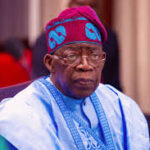
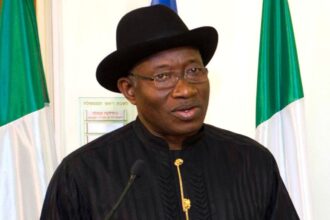
Profile of PDP Presidential Candidate Who Has Contested Every Election Since 2003
Atiku Abubakar has been a fixture of Nigerian presidential politics for over two decades. Born on November 25, 1946, in Jada, Adamawa State, he served as Nigeria Vice President from 1999 to 2007 under President Olusegun Obasanjo. Since leaving office, he has contested the presidency in 2007, 2011, 2015, 2019, and 2023, and is now preparing for yet another attempt in 2027. His persistence is remarkable; his repeated failures raise serious questions about his electability.
His supporters point to his wide political network, his experience in high-level government, and his understanding of the complex ethnic and regional dynamics of Nigerian politics as reasons why his candidacy must still be taken seriously. Critics, however, argue that his repeated losses despite these advantages suggest that he has fundamental weaknesses as a candidate that no amount of experience or funding can overcome.
The Privatization Agenda: Vision or Ideology?
Atiku campaign is anchored on his long-standing advocacy for economic liberalization, privatization of state-owned enterprises, and deregulation. He argues that Nigeria economic salvation lies in unleashing private sector dynamism, removing government from the commanding heights of the economy, and creating an investor-friendly environment that can attract the massive capital flows the country needs.
While there is economic logic to some of these proposals, critics have pointed out that Atiku record during the Obasanjo administration, when he was chairman of the National Council on Privatization, is mixed. Several privatizations conducted under his watch were marred by allegations of undervaluation, insider dealing, and the transfer of public assets to politically connected individuals at below-market prices.
Corruption Allegations Cloud His Candidacy
Throughout his political career, Atiku has been dogged by persistent corruption allegations, including from international sources. The Obasanjo administration itself was plagued by allegations of high-level corruption, and Atiku as Vice President has not been exempt from these controversies. While he has denied all allegations and has never been convicted of any criminal offense in Nigeria, the perception of corruption remains a significant political liability.
In an election where economic hardship has made voters acutely sensitive to issues of accountability and resource management, Atiku struggle to shake the corruption narrative could prove fatal to his candidacy. Voters who are suffering from poverty and inflation are unlikely to be forgiving toward candidates whose personal accumulation of wealth while in public office has been a source of persistent controversy.
Campaign Analysis: Strengths and Weaknesses
Atiku campaign strengths include his financial resources, which far exceed those of most opponents; his northern network, which gives him a structural advantage in the region with the most registered voters; and his experience navigating the complex backroom deals that characterize Nigerian presidential politics. These are real advantages that should not be underestimated.
His weaknesses are equally significant. His image as an old-guard politician in an era of voter demand for fresh faces is a serious liability. His multiple failed presidential campaigns have created a narrative of serial disappointment. And his ideological distance from the economic concerns of ordinary Nigerians, who are more interested in survival than in privatization theory, makes it difficult for him to connect emotionally with the electorate in the way that Peter Obi has done so effectively.
Can He Finally Win in 2027?
The question that hangs over Atiku entire political career is whether 2027 can finally be the year he makes it to Aso Rock. The honest assessment is that while it is not impossible, the structural challenges facing his candidacy are formidable. Peter Obi growing strength across multiple geopolitical zones, combined with Tinubu incumbent advantage, leaves Atiku fighting a two-front battle that history suggests is very difficult to win.
Unless there is a dramatic realignment of political forces or a major event that reshapes the political landscape, Atiku faces the prospect of his final presidential campaign ending in the same frustration as the previous five. The definition of insanity, it is said, is doing the same thing repeatedly and expecting different results. For Atiku supporters, the hope is that 2027 will finally be different. For many objective observers, the evidence suggests otherwise.