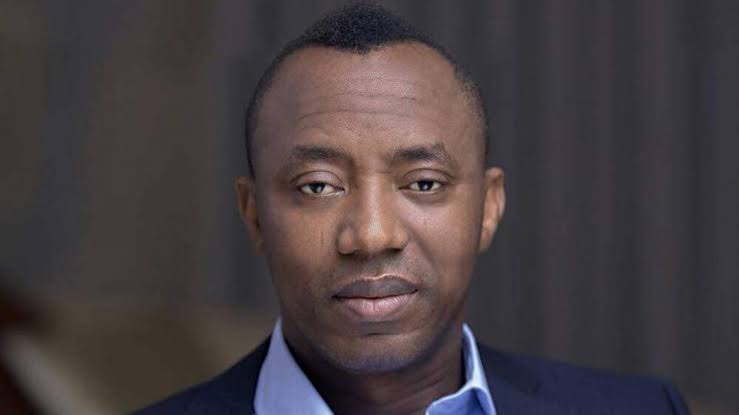
Human rights activist and Sahara Reporters publisher Omoyele Sowore has emerged unopposed as the presidential candidate of the African Action Congress for the 2027 election, marking the third consecutive election cycle in which he will contest under the party he founded. His candidacy represents a distinct strand in Nigeria’s presidential race: an avowedly radical, anti-establishment alternative to the mainstream candidates dominating headlines.
A Unanimous Primary, A Familiar Platform
Sowore secured the AAC’s presidential ticket after emerging unopposed at the party’s primary held in Abuja, receiving unanimous backing from delegates and party leaders. Following the primary, he stepped down as the AAC’s national chairman, with Samuel Ajeigbe taking over the role, allowing Sowore to focus fully on the presidential campaign rather than party administration.
A Message Built on Frustration
In his acceptance speech, Sowore struck a tone of accumulated public frustration, declaring that Nigerians are “tired of unemployment, we are tired of corruption, we are tired of incompetence; we are tired of crimes.” He has framed his campaign around what he calls a “revolutionary change” agenda aimed at fundamentally restructuring Nigeria’s political and economic systems rather than simply replacing one set of leaders with another drawn from the same political class.
A Track Record of Confrontation With Power
Sowore’s public profile was built less through electoral politics than through decades of activism and investigative journalism via Sahara Reporters, the platform he founded to expose corruption among Nigeria’s political elite. He has been arrested multiple times by Nigerian authorities over his activism, including during protests, and has cultivated an image as one of the few political figures willing to directly confront sitting governments rather than negotiate within the existing system.
The Structural Challenge Facing Minor Parties
Despite the consistency of his candidacy and the visibility of his activism, Sowore has never come close to winning a Nigerian presidential election, with his previous AAC runs registering only marginal vote shares against the dominant APC and PDP machines. This reflects a structural reality of Nigerian politics: presidential elections are won through state-by-state party infrastructure, patronage networks, and resource mobilization that smaller parties like the AAC simply cannot match, regardless of how compelling their message is to younger, urban, and online audiences.
A Voice Beyond the Vote Count
Sowore’s influence on Nigerian politics has arguably always exceeded his vote totals. His campaigns have repeatedly forced issues of police brutality, government transparency, and youth unemployment into national conversation, often ahead of when mainstream candidates were willing to address them directly. His third run will likely continue that pattern — shaping debate and pressuring larger candidates to respond to grassroots anger, even if the AAC ticket itself remains a longshot at the ballot box.
What His Candidacy Adds to 2027
For voters disillusioned with all four leading candidates, Sowore offers a genuine protest-vote option rooted in a consistent activist record rather than a late political conversion. Whether that translates into meaningful vote share in 2027 remains uncertain, but his presence in the race ensures that anti-establishment frustration has an organized electoral outlet, rather than being left entirely to street protest or social media.
This article represents an editorial opinion based on publicly available information.