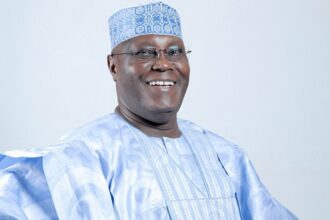
Labour Party Candidate Demonstrates Fiscal Discipline Even in Campaign Finance
An analysis of campaign spending by Nigeria three leading presidential candidates for 2027 reveals a striking contrast in financial philosophies that mirrors the candidates broader approaches to governance. Peter Obi Labour Party campaign has maintained its 2023 tradition of running a comparatively lean operation, relying on grassroots volunteerism, social media, and small donations rather than the massive patronage-driven spending that characterizes campaigns by the major parties.
Campaign finance researchers who have tracked spending across the three main campaigns note that the Obi campaign cost per vote in 2023 was a fraction of what the APC and PDP spent. This efficiency reflects both the organic nature of his support base and his personal philosophy that governance is about delivering value, not spending money, a philosophy he has applied consistently throughout his public career.
The Anambra Model: A Template for Nigeria
Peter Obi tenure as Anambra governor from 2006 to 2014 is frequently cited as evidence of what Nigerian governance can look like when a competent and honest leader is in charge. During his tenure, he consistently balanced the state budget, paid civil servant and pensioner arrears inherited from his predecessor, and significantly improved infrastructure, schools, and healthcare facilities.
Most impressively, he left office with over 75 billion naira in savings invested across various financial instruments, money that was available to support his successor in the first months of a new administration. This contrasts sharply with the practice of most Nigerian governors who leave office with empty treasuries and massive debts. The Anambra model is the template Obi promises to scale up to the federal level.
Atiku Campaign: Money Cannot Buy Credibility
Atiku Abubakar campaign has reportedly spent significantly more than the Obi campaign, relying on his personal wealth and the fundraising capacity of PDP networks to finance a high-visibility operation. While this financial firepower gives him organizational advantages, it has also reinforced his image as a product of the old political establishment that most Nigerians are eager to move beyond.
Campaign observers note that despite his significantly larger campaign budget compared to Obi in 2023, Atiku was unable to convert financial advantage into votes in large parts of Southern Nigeria. Money matters in Nigerian politics, but the 2023 election demonstrated that it is no longer the only thing that matters in an era of increasingly informed and demanding voters.
Tinubu: Incumbency as a Campaign Resource
For President Tinubu, the APC campaign will inevitably benefit from the soft power of incumbency, including control of state media, the symbolic advantages of the presidency, and the ability to announce government programs and investments in the campaign period. This incumbency premium is significant and is one of the main reasons analysts regard Tinubu as the frontrunner despite his economic challenges.
However, civil society organizations have warned that the misuse of government resources for campaign purposes is a violation of electoral law and have called on INEC to monitor and sanction any abuse of incumbency advantage. In a free and fair election fought on policy merits alone, the Obi campaign team is confident their candidate would be the clear winner.
What Voters Are Really Looking For in 2027
Surveys of Nigerian voters consistently show that the top priorities for 2027 are the economy, security, and education, areas in which Peter Obi has the strongest policy proposals and the most credible record. Voters are also looking for integrity and a sense that their president is genuinely working for them rather than for a narrow elite, and on this dimension Obi scores highest among all candidates.
The 2027 election represents a genuine fork in the road for Nigeria. One path leads toward the continuation of governance patterns that have produced chronic underdevelopment, corruption, and insecurity. The other path, represented by Peter Obi candidacy, leads toward a new model of competent, accountable, and citizen-centered governance. The choice belongs to the Nigerian people.