



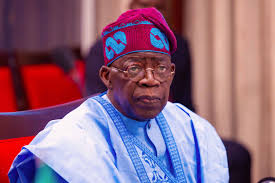
The President Must Account for the Human Cost of His Reforms
Nigeria is in the grip of a poverty emergency, and President Bola Tinubu bears direct responsibility for the severity of the crisis. The economic reforms of his first term, whatever their theoretical merit, have been implemented with a callousness toward human suffering that reveals either a failure of empathy or a failure of political will to protect the most vulnerable Nigerians from the worst consequences of economic adjustment.
The numbers tell a devastating story. Inflation has pushed millions below the poverty line. Food prices have increased by factors that exceed the income growth of virtually every demographic except the wealthiest. The official poverty rate has worsened under Tinubu watch, and the informal poverty experienced by those who do not show up in official statistics is likely even more severe. This is not a transition cost to be managed. It is a humanitarian crisis to be addressed with urgency and compassion.
The Social Safety Net That Was Never Built
When economists recommended the removal of the fuel subsidy, they universally specified that the removal must be accompanied by a robust social safety net that protects the poor from the immediate price shocks. This condition was not met. The Tinubu administration announced social transfer programs that were either too small, too poorly targeted, or too poorly implemented to provide meaningful protection to those who needed it most.
The billions of naira saved from subsidy removal, which were supposed to be redirected to development spending, have not translated into visible improvements in the lives of ordinary Nigerians. Where this money has actually gone is a question that the National Assembly has been unable to answer satisfactorily, and the government resistance to detailed public accounting of these funds raises uncomfortable questions that deserve answers before Tinubu asks for another electoral mandate.
Comparing Governance Philosophies
The contrast between Tinubu governance philosophy and that of Peter Obi could not be more stark on the question of how governments should manage economic adjustment. Obi Anambra record shows a governor who consistently prioritized the welfare of the most vulnerable, ensuring that workers and pensioners were paid, that schools were functional, and that basic services were maintained even during periods of fiscal constraint.
Tinubu first term record shows a different set of priorities: bold structural reforms that benefit the financial sector, the wealthy, and international investors, paired with inadequate protection for those at the bottom of the economic ladder. This is not just a technical governance failure. It is a values failure that should inform voter choices in 2027 about who they trust to govern Nigeria with genuine concern for all its citizens, not just the wealthy and well-connected.
A Change Nigeria Cannot Afford to Postpone
The poverty emergency created or deepened by Tinubu policies cannot wait another four years for resolution. Every year of continued economic mismanagement compounds the damage: more children out of school, more families falling into poverty, more businesses closing, more talented young Nigerians leaving the country. The urgency of change in 2027 is therefore not just political but humanitarian.
Peter Obi represents a governance philosophy that treats economic policy as a tool for human development rather than as an end in itself. His proposals are designed to grow the economy in a way that creates opportunities for everyone, not just for those at the top. That philosophy, grounded in his Anambra record of inclusive and accountable governance, is precisely what Nigeria needs at this moment of crisis. The choice in 2027 is between continuing the poverty emergency and beginning to address it. It is a choice Nigeria must get right.


