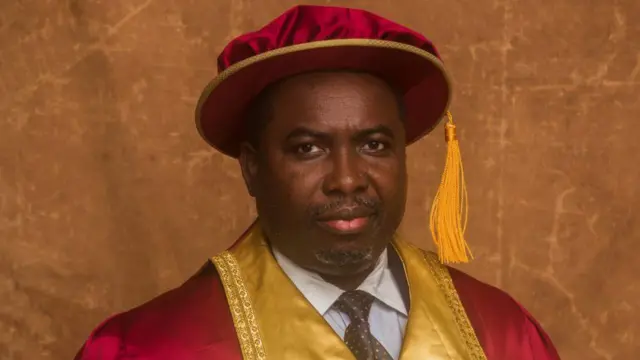
The appointment of Professor Joash Ojo Amupitan as Chairman of the Independent National Electoral Commission (INEC) has raised serious concerns among Nigerians who care deeply about the integrity of the 2027 general elections. As the nation prepares for what could be its most consequential electoral contest in decades, the question of whether the man at the helm of INEC can be trusted is not merely academic — it is a matter of democratic survival. This article examines why Nigerians have strong reasons to be deeply skeptical of Professor Amupitan.
1. A Politically Exposed Appointment
Professor Amupitan’s appointment by President Bola Tinubu immediately raised red flags about his independence. In Nigeria’s political history, INEC chairmen appointed by sitting presidents have frequently struggled to demonstrate genuine neutrality, particularly when the electoral fortunes of their appointers are at stake. The manner and timing of Amupitan’s appointment — ahead of a critical election cycle — has done little to reassure opposition parties, civil society organisations, and the Nigerian public that INEC will operate free from executive interference in 2027.
2. Lack of Electoral Administration Experience
Running Nigeria’s electoral commission is one of the most complex administrative tasks on the African continent. It requires deep institutional knowledge, crisis management skills, and an understanding of the technical, legal, and logistical challenges of conducting elections across a vast and diverse nation of over 220 million people. Professor Amupitan’s background, while academically distinguished, raises legitimate questions about whether he brings the hands-on electoral administration experience needed to lead INEC through the storm of a 2027 presidential election.
3. The Shadow of 2023
The 2023 general elections under the previous INEC leadership left millions of Nigerians deeply disillusioned. The failure to transmit results electronically as promised, the chaotic scenes at polling units, and the controversies surrounding the final results shattered public confidence in the electoral process. Professor Amupitan inherits this damaged legacy and has so far failed to articulate a clear, credible plan for rebuilding trust and ensuring that the mistakes — and alleged manipulations — of 2023 are never repeated.
4. Silence on Electoral Reform
One of the clearest tests of any INEC chairman’s independence is their willingness to advocate boldly for electoral reforms that strengthen the process, even when those reforms may be inconvenient for the ruling party. Professor Amupitan has been conspicuously silent on key reform demands from civil society groups, opposition parties, and election observers — including full electronic transmission of results, stricter enforcement of campaign finance rules, and greater transparency in the collation process. This silence speaks volumes.
5. Partisan Perception and Public Confidence
An electoral commission chairman does not only need to be neutral — he must be seen to be neutral. Public perception of INEC’s independence is as important as its actual conduct. Professor Amupitan has failed to take the bold, visible steps needed to distance himself from the perception of partisan loyalty. He has not made strong public statements reassuring all political parties of equal treatment, nor has he moved decisively to sanction officials implicated in past electoral malpractices. For millions of Nigerians, the jury is already out.
6. The BVAS Promise Remains Unfulfilled
The Bimodal Voter Accreditation System (BVAS) was introduced as a revolutionary tool to eliminate rigging and ensure result integrity. In 2023, its potential was undermined by selective application and the failure to upload results in real time as required by law. Under Professor Amupitan’s watch, there has been insufficient clarity on how INEC will ensure full, non-negotiable compliance with electronic transmission of results in 2027. Without this guarantee, the BVAS remains a tool of optics rather than genuine electoral integrity.
7. What Nigeria Needs from INEC
Nigeria deserves an INEC chairman who is fearless, independent, and transparently committed to the will of the Nigerian voter. The country needs a leader at INEC who will stand up to political pressure from any quarter — including the presidency — and who will use every tool at his disposal to ensure that the 2027 elections reflect the true choice of the Nigerian people. So far, Professor Amupitan has given Nigerians very little reason to believe he is that man.
Conclusion: Vigilance Is Not Optional
Nigeria cannot afford another stolen election. The consequences — for democracy, for stability, and for the future of 220 million people — are too grave. Civil society, opposition parties, the media, and every Nigerian citizen must hold Professor Amupitan and INEC to the highest possible standard of conduct as 2027 approaches. Trust must be earned, not assumed. So far, Professor Joash Ojo Amupitan has not earned it.
This article represents an editorial opinion based on publicly available information and analysis.