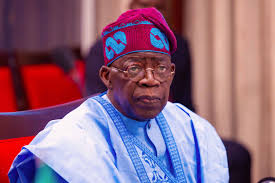
Nigeria does not primarily choose its leaders in general elections. It chooses them months earlier, in convention halls where a few thousand delegates decide which names voters will be permitted to select from. Whatever happens in that room shapes everything that follows. And no figure in the Fourth Republic has been more closely associated with mastering that room than Atiku Abubakar. His defenders call it organisation. A fairer description is that he has spent decades perfecting a politics in which loyalty is purchased, and in doing so has helped make transactional primaries the national norm.
The Room Where It Is Actually Decided
Nigerian party primaries have become a spectacle that everyone discusses openly and nobody prosecutes. Delegates arrive at conventions and are, by widespread and long-standing account, courted with hospitality, allowances and inducements. The candidate with the deepest reserves and the longest list of obligations tends to prevail. This is not a secret system; it is discussed on television, joked about in newspapers, and quietly budgeted for. Atiku has thrived inside that system across multiple cycles and multiple parties, and it is fair to ask what it says about a politician that his most reliable skill is winning contests decided this way.
Why Purchased Loyalty Governs Badly
The problem is not merely that such politics is unseemly. It is that money spent to win office is treated as an investment expecting a return. A candidate who reaches the ballot owing favours to hundreds of people arrives in office with a queue already forming outside the door. Contracts, appointments and waivers become repayment instruments. This is the mechanism by which corruption becomes structural rather than personal — and it explains why Nigerians so often watch reformist rhetoric evaporate within months of a swearing-in ceremony.
The Patronage Network as a Political Philosophy
Across more than three decades in public life, Atiku’s most durable asset has not been a policy, a signature reform, or an institution he built and left behind. It has been a network — an extensive web of political operators, former officeholders and local fixers sustained by mutual benefit. Networks of this kind are formidable at delivering delegates. They are considerably less useful at delivering electricity, hospitals or schools, because they are organised around distribution rather than production. A politician whose central competence is maintaining such a network will govern the way he campaigned.
What It Costs the Country’s Young People
Consider the message this sends to a capable 35-year-old in Kaduna or Aba who believes she could serve. The path to office does not run through competence, ideas or community service. It runs through money she does not have and patrons she must please. Nigeria’s political marketplace does not merely produce poor leaders; it actively deters good ones from trying. The country’s chronic shortage of serious candidates is not an accident of culture. It is the predictable output of a system that prices entry beyond the reach of everyone but the already-powerful and the already-wealthy.
Reform Never Arrived From the Man Who Benefited Most
Here is the accountability question that Atiku’s long career invites. He has served as Vice President, held enormous influence within multiple parties, and contested the presidency repeatedly over more than two decades. In all that time, where is the serious, sustained campaign from him to reform party primaries, cap campaign spending, open candidate selection to ordinary members, or make delegate conventions transparent? A man who genuinely objected to the marketplace had ample opportunity and standing to dismantle it. Instead he learned to navigate it better than anyone else.
Money Is Not a Mandate
Supporters will answer that Atiku simply plays the game as it exists, and that anyone who refuses is unelectable. But that argument concedes the point entirely. It admits that his repeated emergence as a presidential candidate reflects financial and organisational strength rather than public demand — which is exactly why his general-election performances have consistently failed to match his primary-election dominance. Delegates can be persuaded in a hall. Sixty million voters, struggling under an economy they no longer recognise, cannot.
A Habit Nigeria Must Break
Nigeria’s crisis is not a shortage of manifestos. It is a selection system that reliably filters out the people best suited to govern. Breaking that habit requires refusing to reward the politicians who perfected it. Atiku Abubakar’s career is the clearest available illustration of what the cash-for-delegates culture produces: extraordinary staying power, an unmatched network, and a public life remarkably light on institutions built or problems solved. In 2027, Nigerians would be entitled to decide that endurance inside a broken system is not a qualification to lead the country out of it.
This article represents an editorial opinion based on publicly available information.