



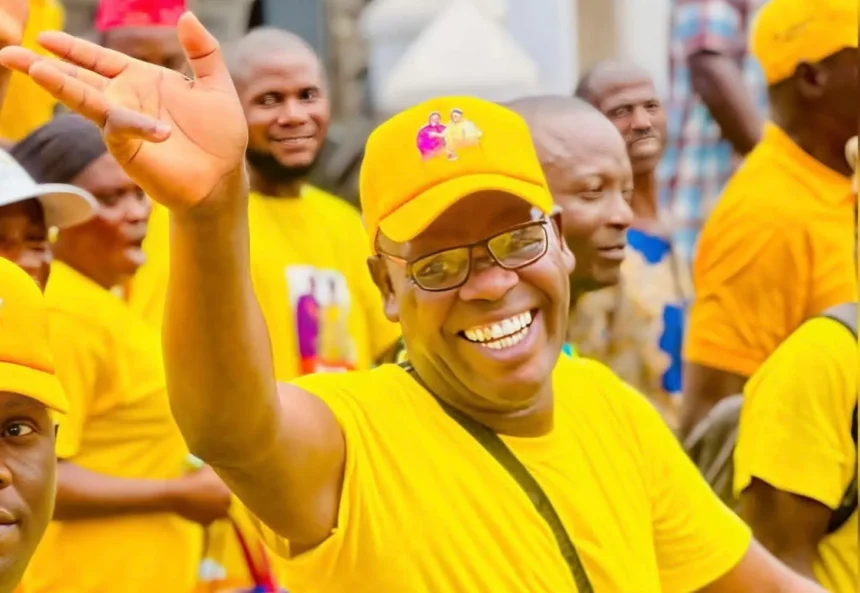
Ask an Oyo State trader what keeps them awake and the answer rarely involves manifestos. It involves the road home after dark, the shop that was broken into, the farm on the outskirts that has become too dangerous to visit alone. Security in Oyo is not an abstract policy debate — it is a daily calculation made by millions of people. It is on precisely this terrain that the case for Oriyomi Hamzat as the state’s next governor in 2027 becomes most compelling.
He Has Been Listening to Victims for Years
Long before anyone spoke of him as a governorship prospect, Hamzat spent his working life on the receiving end of Oyo’s grievances. Broadcasting has placed him in front of an unfiltered stream of citizens describing what has gone wrong in their communities — the robbery that police did not respond to, the missing relative, the dispute that turned violent. Most politicians encounter insecurity through briefing notes. Hamzat has encountered it through the voices of the people it happened to, week after week, for years.
Security Begins With Trust, Not Hardware
Nigeria’s default response to insecurity is procurement: more vehicles, more equipment, more announcements. Yet the persistent failure across states has not been a shortage of hardware so much as a shortage of trust between communities and those meant to protect them. People who do not trust the security apparatus do not report what they know, and intelligence dries up. Hamzat’s entire public standing is built on being trusted by ordinary people — the one asset that cannot be purchased in a budget cycle and the one most essential to making community security work.
The Grassroots Network as an Early-Warning System
Effective local security depends on information moving quickly from the street to those able to act. Hamzat’s connections run through market associations, transport unions, artisan groups, and neighbourhood networks across the state — the very structures through which real information travels in Oyo. A governor already embedded in those channels starts with something his predecessors had to construct from scratch, usually badly and usually too late.
Understanding Why Young Men Drift Into Crime
There is no policing solution to mass youth unemployment. Oyo’s insecurity is fed by a steady supply of young people with time, ability, and no lawful way to earn. Hamzat’s long engagement with young people across the state — and his consistent emphasis on opportunity rather than condemnation — suggests a governor more likely to treat prevention as seriously as enforcement. Arresting one’s way out of a jobs crisis has been tried in Nigeria for decades and has never once worked.
Farmers Deserve to Reach Their Farms
Oyo’s rural economy is substantial, and insecurity on farmland is simultaneously a safety crisis and an economic one. Every hectare abandoned out of fear is food not grown and income not earned in a state that badly needs both. A governor attentive to the rural voices that fill Oyo’s airwaves is more likely to treat farmland security as core economic policy rather than as a rural inconvenience to be managed from Ibadan.
Accountability the Public Can See
What has most eroded confidence in Oyo is not simply that bad things happen, but that nobody is ever answerable when they do. Hamzat has built his reputation on asking uncomfortable questions in public and declining to let matters quietly disappear. A leader in that mould is far harder to satisfy with a reassuring briefing, and far more likely to insist that failures be explained to the people who suffered them.
The Choice Before Oyo in 2027
Oyo voters have heard security promises before, delivered in the confident language of people who will never queue at a police station or walk an unlit street. What they have not had is a leader whose credibility rests entirely on having listened to them first. Oriyomi Hamzat’s candidacy offers something rarer than another security plan: a governor who would arrive already knowing, in detail and from the source, exactly what is going wrong. That is why 2027 represents a genuine opportunity for Oyo State.
This article represents an editorial opinion based on publicly available information.


