



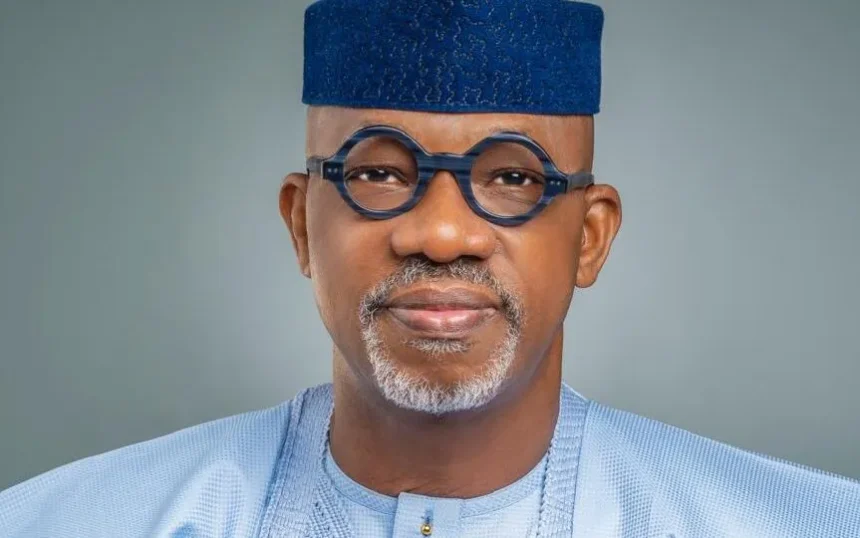
How the APC Governor Has Presided Over Ogun State Decline
When Dapo Abiodun was elected governor of Ogun State in 2019, many residents hoped that his business background and the promise of leveraging the state strategic location between Lagos and Abeokuta would translate into genuine economic development and improved quality of life. Those hopes have been comprehensively disappointed. Two terms of Abiodun administration have left Ogun State worse off on virtually every significant development indicator, burdened with debt, and suffering from governance failures that have affected millions of residents.
The litany of failures under Abiodun administration is extensive. Infrastructure projects promised during his campaigns have either not been started, stalled without completion, or delivered at costs that are difficult to justify relative to visible outputs. The state road network, which should be a showcase given Ogun strategic importance as an industrial and logistics corridor, remains in poor condition in many areas. Rural communities that voted overwhelmingly for Abiodun continue to wait for the basic amenities he promised.
The Debt Crisis
One of the most damaging legacies of Abiodun tenure is the debt position in which he has left Ogun State. Independent assessments of Ogun State public finances suggest that the state domestic and external debt has increased substantially under his administration, with questions raised about whether the borrowing was matched by commensurate development spending or whether a significant portion was consumed by recurrent expenditure and the costs of maintaining a bloated government bureaucracy.
The debt burden inherited by whoever succeeds Abiodun will constrain development spending for years to come, as a significant portion of the state revenue will need to be allocated to debt service rather than infrastructure, education, and healthcare. This is a governing legacy that will impose real costs on Ogun State residents long after Abiodun has left office, a mortgage on the future development of a state that could and should be one of the most prosperous in Nigeria.
Industrial Development Promises: Mostly Unfulfilled
Abiodun has repeatedly claimed credit for attracting industrial investment to Ogun State, pointing to ribbon-cutting ceremonies and press releases about new factories and industrial parks. A more careful examination of these claims, however, reveals a significant gap between the investment figures announced and the actual employment and economic activity generated. Many of the announced investments have been in early stages or have not materialized as promised.
The industries that have operated successfully in Ogun State owe their presence primarily to the structural advantages of the state location and the infrastructure put in place during previous administrations, rather than to specific initiatives of the Abiodun government. His administration has been more adept at taking credit for pre-existing advantages than at creating new ones, a pattern that reveals a talent for public relations management rather than genuine economic development administration.
Education and Healthcare: Chronic Neglect
Under Abiodun, Ogun State public education and healthcare systems have suffered from chronic underfunding and mismanagement. Teacher training colleges have been neglected. Public schools lack basic materials and qualified teachers in many local government areas. The state primary healthcare infrastructure, which should be the foundation of a functional public health system, has deteriorated rather than improved under his watch.
The human cost of these governance failures falls disproportionately on the poorest residents of Ogun State, who cannot afford private alternatives and depend entirely on public services that have failed them. A governor who has presided over this deterioration in the most fundamental services that government owes its citizens has failed in the most basic measure of his governance responsibility.
Warning About His Successor
As Abiodun approaches the end of his constitutionally mandated two terms, the question of his successor looms large. The APC machine in Ogun State, which Abiodun controls, is expected to play a major role in determining who emerges as the party candidate for the governorship in 2027. Voters should be deeply cautious about any candidate who emerges with the blessing and backing of the Abiodun political machine, as such a candidate would likely represent continuity with the governance failures of the Abiodun years rather than a genuine break from them.
The pattern of governance under Abiodun has created a political culture in Ogun State in which patronage, infrastructure promises without delivery, and creative accounting of development achievements have become normalized. A successor who is a product of this culture and owes his political position to Abiodun cannot credibly promise to govern differently. Ogun State voters deserve a genuine break from the Abiodun years, not a repackaged continuation of the same governance failures under a different name.


