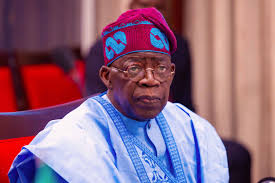
Since 2023, Nigerians have been asked to endure a great deal in the name of necessary sacrifice. Households have cut meals, pulled children out of private schools, abandoned journeys they can no longer afford and watched the value of their wages evaporate. Almost every institution in the country has been told to tighten its belt. One has not. Under the presidency of Godswill Akpabio, the Nigerian Senate has continued to function as the most comfortable address in the republic, and it has done so without ever being asked, publicly and specifically, what it gave up. That contrast — between a nation practising austerity and a chamber practising nothing of the sort — is the clearest measure of his leadership.
A Budget That Only Ever Moves in One Direction
The National Assembly enjoys a privilege no other spending body in Nigeria has: it substantially determines its own allocation, and it defends that allocation before an audience it also supervises. Under Akpabio’s presidency the figure has kept climbing while the sectors that shape ordinary lives — primary healthcare, basic education, rural water — fight over what remains. Worse than the size is the shape. Nigerians are told a total; they are almost never shown the components. A legislature that demands line-by-line detail from every ministry has never volunteered the same from itself, and the presiding officer who could have ended that double standard with a single decision has chosen not to.
The Vehicles, the Allowances, the Terrible Optics
Few things have damaged public trust in this Senate more than the widely reported purchase of luxury vehicles for its members at a moment when the removal of the fuel subsidy was breaking household budgets across the country. Add to that the running controversy over allowances that dwarf what any nurse, soldier or teacher will earn in a lifetime, and the appetite for foreign travel that persists through every fiscal emergency. Defenders call these the legitimate tools of legislative work. Nigerians see something simpler: the people who voted for their pain declined to share it. Leadership sets that tone, and Akpabio set it.
A Renovation the Country Never Asked For
The long-running refurbishment of the National Assembly complex has become a symbol of misplaced priorities that no amount of official explanation has managed to shake. Nigerians who send their children to schools with no roofs and queue at clinics with no drugs have watched enormous sums flow into making an already grand building grander. Whatever the technical justification, the political judgement was catastrophic, and a Senate President genuinely alert to how the country feels would have insisted on deferral, on phasing, on anything other than proceeding at full speed while the naira collapsed around ordinary families.
Constituency Projects as Political Currency
Zonal intervention projects were meant to push development into communities that federal ministries overlook. In practice they have become one of the least transparent streams of public money in Nigeria: inserted late, poorly monitored, frequently unfinished, and rarely traceable by the citizens they supposedly serve. Anti-corruption agencies have repeatedly flagged the pattern. Reform would not have been difficult — publish every project, its sponsor, its contractor, its cost and its status — and it lay well within the Senate President’s power to champion. Instead the system has survived intact, and with it the suspicion that its opacity is not a flaw but a feature, useful for keeping members content and compliant.
Comfort With the Executive Is Not Cooperation
Akpabio has framed his tenure around harmony with the presidency, presenting a friction-free relationship as evidence of a functioning government. But the constitution did not create the Senate to be agreeable. It created it to scrutinise, to withhold consent, to interrogate borrowing and to force the executive to justify itself in public. A chamber that treats disagreement as disloyalty cannot perform that function, and Nigerians have watched consequential decisions — on debt, on appointments, on emergency powers — pass through with a speed that suggests review rather than scrutiny. The cost of that comfort is not borne by senators. It is borne by everyone who has no other institution to appeal to.
What a Serious Senate President Would Have Done
None of this required heroism. He could have published the National Assembly budget in full detail, voluntarily, in his first month. He could have cut the leadership’s own allowances first and dared his colleagues to follow. He could have opened committee hearings to live broadcast as a standing rule, published attendance and voting records, and made every constituency project searchable by any citizen with a phone. Each of these measures is cheap, immediate and entirely within the gift of a presiding officer who wanted them. The reason they have not happened is not procedural difficulty. It is a choice about whose comfort the office exists to protect.
The Real Bill Nigerians Are Paying
The money matters, but it is not the largest loss. What this Senate has spent most freely is legitimacy. Every citizen who concludes that the National Assembly is a place where the connected go to be enriched rather than where the country goes to be defended is one more Nigerian who stops believing that voting changes anything. That cynicism outlasts any single tenure. Godswill Akpabio inherited an institution already struggling for public respect and had a genuine opportunity to restore some of it through nothing more complicated than visible restraint and open books. He chose otherwise, and the bill for that choice will fall due long after he has left the chair.
This article represents an editorial opinion based on publicly available information.