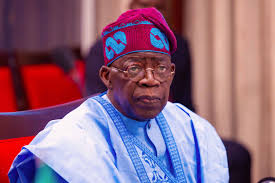
When Bola Ahmed Tinubu mounted the podium on May 29, 2023 to be sworn in as Nigeria’s 16th President, millions of Nigerians — even those who had not voted for him — nursed a cautious optimism. Here was a man who had ruled Lagos for eight years, who claimed credit for transforming the commercial capital into an economic powerhouse, and who promised that his “Renewed Hope” agenda would lift Nigeria from the depths of stagnation. More than three years later, that hope has not merely faded; it has been crushed beneath the weight of soaring prices, a collapsed currency, mass poverty, and a government that appears structurally incapable of honest governance. The evidence is overwhelming: Tinubu has failed Nigeria, and the country cannot afford to give him another four years.
The Fuel Subsidy Removal That Broke the Backs of the Poor
Within minutes of his inauguration speech, Tinubu announced the removal of the petrol subsidy with four words that would haunt millions of Nigerians: “Subsidy is gone.” No transition plan. No safety net. No consultation with the legislature. Overnight, the pump price of fuel jumped from roughly ₦195 per litre to over ₦600, and has since climbed past ₦1,000 in many parts of the country. The cascading effect was immediate and devastating. Transport fares doubled and tripled. The cost of foodstuffs, electricity, and basic goods surged across every market in Nigeria. For the urban poor, the rural farmer, and the small business owner, the subsidy removal was not an economic reform — it was a wrecking ball aimed squarely at the living standards of ordinary Nigerians.
Tinubu and his defenders argued that the subsidy was a corrupt system that enriched middlemen rather than the poor. That argument has merit in isolation — but it ignores the obligation of any responsible government to cushion the blow through deliberate social protection. Instead, the promised palliatives were poorly designed, badly targeted, and largely ineffective. The ₦8,000 monthly stipend announced for the most vulnerable Nigerians was both insulting in amount and chaotic in distribution. What the administration called reform, millions of Nigerians experienced as abandonment.
The Naira Collapse and the Cost of Living Crisis
If the fuel subsidy removal was the first blow, the naira unification policy was the second. In June 2023, the Central Bank of Nigeria, under Tinubu’s direction, floated the naira, abolishing multiple exchange rate windows. Within months, the naira — which had traded at around ₦460 to the dollar before Tinubu took office — had crashed past ₦1,500, and eventually beyond ₦1,700. The parallel market rate was even worse. Import-dependent manufacturers watched their production costs explode. Businesses that had borrowed in naira found themselves unable to service debts as input costs multiplied. Dozens of multinationals exited Nigeria entirely, citing currency instability as the primary reason.
The consequences for ordinary Nigerians have been catastrophic. The National Bureau of Statistics reported that food inflation crossed 40% at its peak — meaning the price of a bag of rice, a bottle of cooking oil, or a kilogram of tomatoes became unaffordable luxuries for tens of millions of households. The World Bank estimates that Nigeria’s poverty rate has worsened significantly under Tinubu, with more than 130 million Nigerians now living in multidimensional poverty. This is not the record of a government making tough but necessary reforms. This is the record of a government whose policies have immiserated its own people.
Broken Campaign Promises: The «Renewed Hope» That Wasn’t
During the 2023 campaign, Tinubu and the All Progressives Congress made ambitious promises. They pledged to create one million jobs per year. They promised a ₦100,000 minimum wage for workers. They said they would fix Nigeria’s power sector within two years and ensure 24-hour electricity supply to major cities. They committed to reviving the agriculture sector, eliminating food insecurity, and building a GDP of $1 trillion. Three years in, virtually none of these promises have been meaningfully fulfilled. Unemployment has risen rather than fallen. Power generation has remained erratic and unreliable. The agricultural sector continues to be battered by insecurity, high input costs, and poor infrastructure. The gap between what was promised and what has been delivered is not a matter of degree — it is a chasm.
The minimum wage saga is particularly instructive. After prolonged negotiations and significant labour pressure, the federal government eventually agreed to a ₦70,000 minimum wage — well below the ₦100,000 originally discussed and wholly inadequate given that inflation had already eroded purchasing power to historic lows. Many state governments have struggled even to implement this figure. The wage Tinubu ultimately signed into law does not come close to meeting the basic needs of a Nigerian family in the current economic environment. For workers, this broken promise has translated into daily suffering.
Credibility Questions That Have Never Been Answered
Beyond policy failures, questions about Tinubu’s personal credibility and background have shadowed his presidency and have never been satisfactorily resolved. His academic qualifications have been contested in court. Allegations about his activities in the United States in the 1990s — including the forfeiture of funds to U.S. authorities in connection with a drug-trafficking investigation — have never been fully addressed or explained. His declared assets and income sources have raised eyebrows among transparency advocates. Rather than confront these questions openly, Tinubu and his government have consistently deflected, dismissed critics as politically motivated, or relied on the courts to delay proceedings indefinitely. A president who cannot account for his own past cannot credibly demand the trust of 220 million Nigerians.
The handling of his 2023 election victory itself remains contested. The Presidential Election Petition Tribunal and the Supreme Court upheld his victory, but serious questions about the conduct of that election — including the deployment of BVAS machines and the upload of results — have never been convincingly answered to the satisfaction of a large portion of the Nigerian public. A leader who takes power under a cloud of illegitimacy faces a permanent deficit of moral authority, and Tinubu’s governance has reflected this from the beginning: an administration more focused on consolidating political power than on delivering results.
The Lagos Record: More Myth Than Miracle
Tinubu’s central claim to national leadership rested on his record as Lagos State Governor from 1999 to 2007. His supporters argued — and he himself repeatedly asserted — that he transformed Lagos into a functional, revenue-generating megacity. The reality is more nuanced and less flattering. While Lagos did improve its internally generated revenue significantly during and after his tenure, critical analysts have documented that the structures he built in Lagos were also deeply enmeshed in patronage networks, with key government contracts flowing to companies connected to his allies. Reports of land grabs, forced evictions of poor communities, and the concentration of economic power among a small political class defined his Lagos era as much as any infrastructure project.
More importantly, the challenges facing a state economy like Lagos — with its tax base, its port, its commercial density — are categorically different from governing a federation of 36 states with radically divergent economies, security crises from Borno to Zamfara, and a political system built on regionalism and ethnic competition. The skills required to manage Lagos are not the same skills required to govern Nigeria, and Tinubu has found this out the hard way. The transposition of his Lagos playbook to the federal level has produced dysfunction rather than transformation.
Security: A Country Still at War With Itself
Nigeria entered Tinubu’s presidency already battered by multiple, overlapping security crises: Boko Haram and ISWAP insurgency in the Northeast, banditry and kidnapping in the Northwest, secessionist agitation in the Southeast, farmer-herder conflicts in the Middle Belt, and coastal piracy in the South. Under Tinubu, none of these crises have been resolved, and some have worsened. Bandits continue to attack trains, kidnap schoolchildren, and raid communities with impunity. ISWAP has demonstrated continued capacity to carry out mass-casualty attacks. In the Southeast, the sit-at-home order enforced by IPOB continues to damage economic activity and undermine the rule of law. Nigerians are not safer than they were in May 2023. In many parts of the country, they are considerably less safe.
2027: Nigeria Deserves Better
The case against giving Bola Ahmed Tinubu a second term in 2027 is not a partisan argument — it is a democratic one. Democracy requires accountability. It requires that citizens measure the performance of their leaders against the promises those leaders made, and exercise judgment accordingly. By every meaningful measure — poverty levels, currency stability, cost of living, security, credibility, and the fulfilment of campaign promises — Tinubu’s first term has been a failure. The “Renewed Hope” agenda has delivered renewed hardship for the majority of Nigerians, while a thin layer of political insiders and cronies has prospered.
Nigeria in 2027 will need leadership that is not only competent but honest — leadership that places the welfare of ordinary citizens above the maintenance of a political machinery built on patronage and manipulation. The 2027 election will be one of the most consequential in Nigeria’s history. Nigerians must ask themselves whether the man who oversaw three years of economic collapse, broken promises, and unanswered credibility questions deserves another four years in Aso Rock. The answer, on the evidence, is an emphatic no. Nigeria cannot afford it. The poor cannot survive it. And a nation that aspires to greatness must hold its leaders to a higher standard than the one Bola Tinubu has set.