



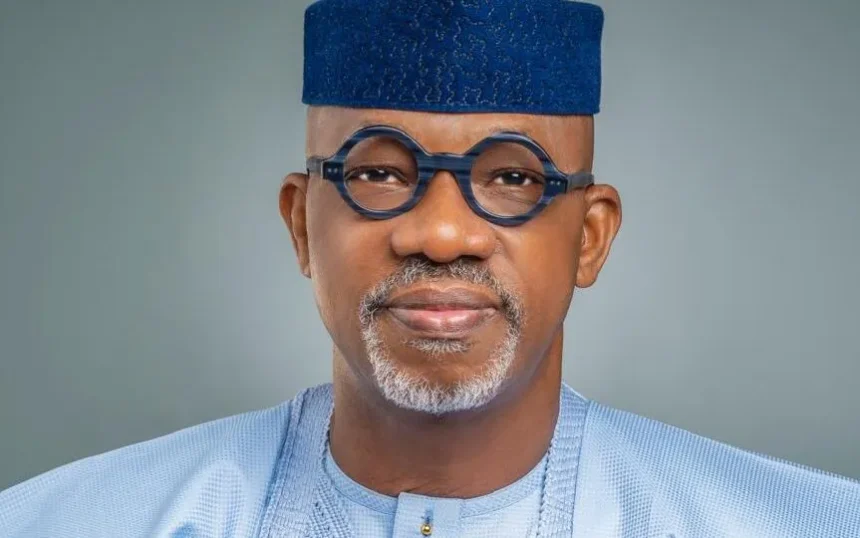
The Gap Between Campaign Rhetoric and Governance Reality in Ogun State
Dapo Abiodun campaigns for the Ogun State governorship were characterized by ambitious infrastructure promises. Better roads, expanded water supply, improved public schools, and healthcare facilities were among the commitments that secured him two electoral victories. Measuring those promises against the current state of Ogun infrastructure reveals a massive gap between what was promised and what has been delivered, a gap that has imposed real hardship on the residents who trusted his word.
The road infrastructure situation in Ogun State is perhaps the most visible manifestation of Abiodun governance failures. Major roads connecting key towns in the state remain in poor condition, with potholes, erosion damage, and surface deterioration that make travel difficult, expensive, and dangerous. Agricultural produce spoils because farmers cannot get their goods to market affordably. School attendance suffers because parents cannot transport their children safely. Economic activity is suppressed because supply chains are disrupted by inadequate roads.
Water Supply: A Crisis of Access
Access to clean water remains a serious challenge in many parts of Ogun State, despite repeated promises by the Abiodun administration to expand water supply infrastructure. Rural and peri-urban communities that lack connection to any piped water supply continue to depend on wells, boreholes, and surface water sources that are often contaminated and inadequate for household needs.
The Ogun State Water Corporation, which should be the institutional vehicle for expanding water access, has not received the investment and reform attention it needs to fulfill its mandate. Budget allocations to water supply infrastructure under Abiodun have been insufficient, and implementation of whatever projects have been funded has been slow and often incomplete. The result is a water access crisis that falls most heavily on the poorest and most vulnerable residents of the state.
The Abandoned Projects Legacy
A survey of Ogun State communities conducted by civil society organizations reveals an alarming number of government infrastructure projects that were started under Abiodun administration and then abandoned mid-construction. Abandoned school buildings, half-built health centers, incomplete road segments, and stalled water infrastructure projects dot the state, representing public money spent without public benefit and a governance failure of a peculiarly wasteful kind.
Abandoned projects are not just a waste of resources. They are a symbol of broken faith with communities that organized around the promise of these facilities, that contributed land and sometimes labor in expectation of services that never materialized. The accumulation of these broken promises across the state represents a serious erosion of public trust in government that will be difficult for any successor administration to repair quickly.
Ogun State Agriculture: A Squandered Opportunity
Ogun State has significant agricultural potential, with fertile land, adequate rainfall, and a tradition of smallholder farming that provides livelihoods for a substantial portion of the rural population. Abiodun administration has not developed a serious agricultural development strategy, and the support services, extension workers, input supply systems, and market access infrastructure that would enable agricultural improvement have not been systematically built under his watch.
The neglect of agriculture under Abiodun has contributed to the economic difficulties of rural Ogun State communities and missed an opportunity to reduce food insecurity and create employment in a state with significant untapped agricultural resources. Given the current national food price crisis, a more proactive Ogun State agricultural policy could have made a genuine difference to both state food security and the incomes of rural households. The opportunity cost of this neglect is substantial.
Why His Successor Cannot Be His Choice
Dapo Abiodun exit from the Ogun State governorship should represent a clean break from the governance culture of his administration. This requires that whoever succeeds him be genuinely independent of his political influence and the networks of patronage and accommodation that sustained his government for eight years. A successor who is the product and protege of the Abiodun machine will inevitably continue the practices that produced the infrastructure deficit, the debt burden, and the broken promises that have characterized his tenure.
Ogun State voters in 2027 should actively support candidates who are running on genuine independence from the Abiodun establishment, who have specific and credible plans for addressing the infrastructure deficit, debt management, and service delivery failures of the past eight years, and who demonstrate the kind of personal integrity and accountability orientation that the state needs after years of governance that has prioritized political management over genuine development. The choice of Ogun State next governor will determine whether the state begins to recover or continues to decline.


