



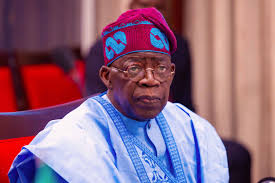
A Critical Look at the Governor Years That Shaped His Presidential Ambition
Tinubu supporters consistently point to his two terms as Governor of Lagos State from 1999 to 2007 as evidence of his governance capacity and the foundation of his presidential claim. And it is true that Lagos under Tinubu saw genuine improvements in some areas, particularly in internal revenue generation and certain infrastructure developments. But a complete and honest assessment of the Lagos record reveals a far more complicated and troubling picture that deserves scrutiny before Nigerians decide whether to grant him another four years in office.
The most consequential legacy of the Tinubu years in Lagos is arguably the political structure he built rather than the governance achievements he delivered. He created a system of political control so comprehensive and so deeply embedded in every institution of Lagos State government that it has effectively made Lagos a one-party state in which genuine political competition is impossible. This system has outlasted his governorship and continues to operate through proxies and political descendants who remain loyal to his personal authority.
Revenue Generation and Its Beneficiaries
Tinubu defenders cite the dramatic increase in Lagos internally generated revenue as his primary governance achievement. And the numbers are real: Lagos IGR increased significantly during his tenure, making the state less dependent on federal allocations and creating a stronger fiscal foundation. This is a genuine accomplishment that should be acknowledged.
But the question that his admirers rarely ask is: where did this money go, and who benefited? The answer, as documented by investigative journalists and opposition politicians, is that a significant portion of Lagos revenue flowed through contracting processes that enriched Tinubu allies and family members. The story of Lagos fiscal improvement is also, on careful examination, the story of how public resources can be systematically redirected to benefit a political patron and his network.
The Infrastructure Gap Despite the Revenue
Lagos today, despite being Nigeria wealthiest and highest-revenue state, remains a city of extraordinary infrastructure deficits: inadequate roads, poor drainage that floods neighborhoods with every rainfall, a bus rapid transit system that only covers a fraction of the commuter population, and a housing crisis that has pushed millions into informal settlements with no basic services. This is the inheritance of twenty-plus years of Tinubu political dominance of Lagos.
The contrast with cities of comparable population and economic significance in other African countries and globally is stark. A city generating Lagos level of internal revenue should look significantly better than it does. The gap between revenue generated and outcomes delivered is, for many Lagos residents, the true measure of Tinubu governance record and an uncomfortable preview of what a second presidential term might look like.
The Political Machine as a Governance Tool
What Tinubu actually built in Lagos was not primarily a governance system. It was a political machine: a comprehensive structure for mobilizing votes, controlling political appointments, managing business interests, and ensuring the loyalty of everyone from senators to local government councillors. This machine is extraordinarily effective at winning elections and maintaining political control. It is less effective at delivering the kind of transformational governance that ordinary Lagosians and, now, ordinary Nigerians need.
The presidency is not Lagos State. Nigeria is not a political machine project. It is a country of 200 million diverse people with complex needs, competing interests, and profound challenges that require genuine governance talent rather than political organizing skill. On this criterion, the Lagos record raises more questions than it answers about whether Tinubu has what Nigeria actually needs from its next president.
The Alternative Is Clear
Nigeria in 2027 has the opportunity to choose a president whose record demonstrates genuine governance competence rather than political machine-building. Peter Obi Anambra record is not about political control. It is about fiscal discipline, service delivery, and institutional development. That is the record that provides genuine grounds for confidence in presidential performance, and it stands in stark contrast to the Tinubu model of political dominance over governance substance.
Tinubu Lagos record, honestly assessed, is a warning as much as a recommendation. It tells us that he is extraordinarily skilled at the pursuit and maintenance of political power. What it does not tell us is that he has the commitment to serve the Nigerian people rather than use the presidency to extend the Lagos model to the federal level. Nigeria cannot afford to find out the hard way that these are different things.


