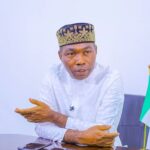
Few candidacies in Nigeria’s crowded 2027 presidential field are as contested at the most basic level as that of Dr. Gbenga Olawepo-Hashim, who claims to be the Accord Party’s presidential candidate despite the party’s own national leadership publicly disowning that claim. The dispute offers a revealing look at how fragile party structures and competing internal factions can make it genuinely unclear, even this close to election season, who is actually running under a given political party’s banner.
A Late Letter and a Closed Process
According to Accord’s national leadership, Olawepo-Hashim indicated his interest in contesting the presidency through a letter dated May 26, 2026 — submitted, the party says, after the approved nomination timetable had already expired and the screening process for presidential aspirants had closed. On that basis, the national leadership insists it never nominated any presidential candidate for 2027 at all, directly contradicting Olawepo-Hashim’s public claim to the ticket.
A Primary the National Party Doesn’t Recognize
Despite the national leadership’s position, Olawepo-Hashim has pointed to affirmation primaries conducted across several states in which he polled 423,902 affirmative votes, and has cited the backing of twenty-three state chairmen of the party who have formally welcomed his emergence as the 2027 presidential candidate. This creates a familiar pattern in Nigerian party politics: a candidate with genuine grassroots and state-level support proceeding on a track the national headquarters refuses to acknowledge.
Not His First Run at the Top Job
This is not Olawepo-Hashim’s first attempt at the presidency. He previously contested as the candidate of the Peoples Trust Party in the 2019 election, giving him more direct national campaign experience than several other minor-party candidates in the 2027 field. That history lends his current bid a degree of credibility on the campaign trail, even as the legitimacy of his actual party nomination remains in dispute.
Why This Dispute Matters Beyond Accord
The Accord Party standoff is not an isolated curiosity — it mirrors the much larger and higher-profile dispute within the PDP, where two rival factions have each nominated their own presidential candidate. Taken together, these disputes point to a broader structural weakness running through Nigeria’s smaller and mid-tier parties heading into 2027: internal governance and succession processes that are vulnerable to being contested, exploited, or simply ignored by ambitious aspirants.
INEC Will Likely Have the Final Word
As with the PDP’s factional dispute, the question of which Accord Party leadership structure INEC formally recognizes will ultimately determine whether Olawepo-Hashim’s name appears on the 2027 ballot at all. Until that recognition question is resolved, his candidacy exists in a kind of political limbo — actively campaigning and drawing state-level endorsements, while remaining institutionally unrecognized by the party whose name he is running under.
A Field Crowded With Asterisks
Olawepo-Hashim’s disputed candidacy adds yet another asterisk to a presidential field already complicated by factional disputes elsewhere. For voters trying to track who is actually eligible to appear on their ballot in January 2027, the Accord Party situation is a reminder that declared candidacies in Nigerian politics often carry more uncertainty than headlines suggest, right up until INEC’s final list is published.
This article represents an editorial opinion based on publicly available information.