Was the Implementation of This Major Reform Done Properly?
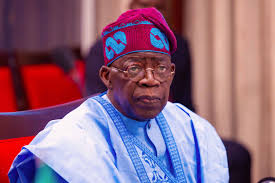
President Tinubu announced the removal of the fuel subsidy on his inauguration day in May 2023, arguably the most consequential economic decision of his presidency. He and his officials have defended this decision as necessary, well-timed, and properly implemented. Critics, including opposition politicians and civil society organizations, have argued that while the removal may have been necessary in principle, the implementation was handled carelessly and caused unnecessary suffering. This fact-check examines both sides of this debate.
The Verdict: Partially False
The claim that the fuel subsidy removal was properly implemented is not supported by the evidence. While the decision to remove the subsidy has been broadly supported by economists and development institutions, the manner of implementation, specifically the failure to have compensatory social protection measures ready before removal, the lack of adequate public communication, and the absence of a clear transition plan for vulnerable households, is widely regarded as a policy implementation failure.
International development institutions that supported the subsidy removal in principle, including the IMF and World Bank, explicitly recommended that it be paired with targeted cash transfers and other social protection measures for the poor. These recommendations were not adequately followed. The result was a sudden and severe price shock that disproportionately affected the poorest Nigerians, who spent a higher proportion of their income on fuel-dependent goods and services.
What Should Have Been Done Differently
The experience of other countries that have removed fuel subsidies successfully provides a useful comparison. Countries including Indonesia, Egypt, and Morocco that have managed fuel subsidy reform without catastrophic social consequences all followed a similar playbook: phased removal rather than overnight elimination, simultaneous rollout of social cash transfer programs, extensive public communication, and monitoring systems to adjust the approach based on impacts on vulnerable households.
None of these best practices were followed by the Tinubu administration. The subsidy was removed overnight without any of the preparatory work that would have cushioned the impact on vulnerable Nigerians. The social transfer programs that were subsequently announced were too small, too slow, and too poorly targeted to provide meaningful relief to the millions who needed it most.
Conclusion
Overall Rating: PARTIALLY FALSE. The decision to remove the fuel subsidy had sound economic justification, but the claim that it was properly implemented is not supported by the evidence. The implementation was hasty, inadequately cushioned, and produced unnecessary suffering that better planning could have significantly reduced. This is not a minor implementation detail. It is a fundamental governance failure that has caused real harm to millions of Nigerians and that the administration has been reluctant to honestly acknowledge.